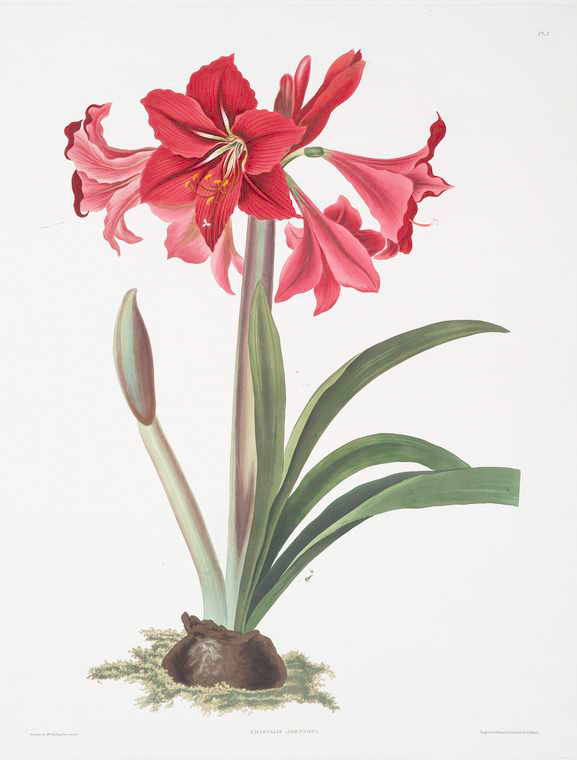
Mariette Tulips 1942
I am working on a Heritage worksheet for tulips found in historical gardens such as George Washington's Mount Vernon and Thomas Jefferson's Monticello. I hope to achieve a better understanding of the cultivars available during the 16th, 17th, 18th, 19th, and 20th centuries. I would eventually have it searchable by color and date of bloom, and who grew these in their gardens.
White Triumphator 1942
Tulipa 'Angélique 1959
Awarded AGM
Division 11 - Double late (peony flowered) tulip
DUTCH ART FROM THE 17TH CENTURY
Tulip Madness
The “Dutch Golden Age”, which occurred roughly between 1568 and 1648, witnessed a blossoming of trade, economics, science and art. During this period, the work of women artists was encouraged. Two of these women, Rachel Ruysch (1664-1750), and Maria van Oosterwijck (1630-1693) are remembered for their floral paintings. A third artist, the German born Maria Sibylla Merian (1647-1717) moved to Amsterdam, and became known for her scientific drawings of flowers and other wildlife.
 |
| Great Tulip Book: Semper Augustus, 1600-1699, gouache on paper, 12-1/8 x 7-7/8 inches / 30.8 x 20.0 cm (Norton Simon Museum) |
The still life genre of painting became especially significant during the Dutch Golden Age, and floral still life works make up a significant sub-genre. Though flowers painted in this period are characterized by an intense, almost encyclopedic realism, compositions were often amalgamated from individual studies, or copied from book illustrations. In addition, blooms from very different seasons were routinely included in the same painting. This is in part a result of the position of flowers, in particular tulip bulbs, within the Dutch economy. Flowers were a significant source of wealth for many business men. Fortunes were routinely made and lost in the trade of flowers. Though the large mixed bouquets seen in these paintings share many similar aspects with those we create today at Westmount Florist, they possess a fundamental unreality when considered in relation to their own period. Vases containing mixed bouquets were almost non-existent within the Dutch home of the period. Flowers more often displayed individually in specially designed vases known as “tulipieres”. Floral still life subjects were in fact considered highly symbolic advertisements, and were used by Dutch tradesmen to display their product as well as their personal wealth and prosperity.
 |
Tulips famous for their beautiful virus induced variegated colors.
Jan David de Heem, 1660 |
Rachel Ruysch was born in The Hague in 1664, but moved to Amsterdam at the age of three. During her childhood she helped her father amass and display a large collection of curiosities and scientific specimens in their home. Apprenticed at fifteen to floral painter
Willem van Aelst (1627-1638), her work was to become highly influenced by his style and composition. In 1701 Ruysch was inducted into the painter’s guild of The Hague, and several years later, was invited to work for the court in Düsseldorf. Ruysch continued to paint until her death at the age of eighty-five, and about a hundred paintings by her are known to survive today. Her work is usually characterized by dramatically darkened backgrounds, and luminously coloured flowers.
 |
Still Life with Flowers (1665)
Willem van Aelst |
Rachel Ruysch grew up in Amsterdam, into a wealthy and prominent family of Dutch artists, architects and scientists. Her father, Frederik Ruysch, was an eminent scientist and professor of anatomy and botany. He possessed a well-known collection of rare natural history specimens, which Rachel helped catalogue and record. He encouraged her artistic talents, careful observation of the natural world and scientifically accurate renderings of plants and flowers. At age fifteen, Ruysch began an apprenticeship with famous still life painter Willem van Aelst. By eighteen, she was already producing her first still life paintings and starting to establish her long and successful career.
A Working Mother
At twenty nine, Rusch married portrait painter Juriaen Pool, with whom she had ten children. Despite her enormous domestic responsibilities, she was remarkably prolific, producing more than 250 paintings over seven decades. Her works were in great demand, and she achieved widespread fame and international recognition. Considered one of the most successful artists of her day, contemporary Dutch writers called her “Holland’s art prodigy” and “our subtle art heroine.”
In 1648, the Netherlands became independent from Spain, ushering in a period of great economic prosperity. Flourishing international trade and a thriving capitalistic economy resulted in a newly affluent middle class. Wealthy merchants created a new kind of patronage and art market. Without a powerful monarchy or the Catholic Church to commission artworks (the Dutch were Protestants), artists produced directly for buyers. Like today, buyers purchased art either from professional dealers or from the artist in their studios. Subjects like big historical, mythological or religious paintings were no longer desired; buyers wanted portraits, still lifes, landscapes and genre paintings (scenes of everyday life) to decorate their homes. Proud of their newly independent country and trade wealth, they desired artworks that would reflect their success. In a competitive open market, artists began to specialize. Rachel Ruysch became known as one of the greatest flower painters of her time.
Ruysch’s career paralleled the growth of the Dutch horticultural industry and the science of botany. The Netherlands became the largest importers of new and exotic plants and flowers from around the world. Once valued primarily for their use as herbs or medicine, flowers became newly appreciated simply for their beauty and fragrance. They became prized luxuries and desirable status symbols for the wealthy. Botanists and gardeners sought the rarest specimens imported from overseas trade. The tulip, like the one featured prominently in Ruysch’s painting below, was the most exotic.
Coveted for their intense and unusually varied colors, tulips were introduced into the Netherlands from Turkey in the late 16th century. The Dutch fell madly in love with them. Because it takes so long for a tulip to be grown from seed, demand far outpaced supply. The rarest and most valuable tulips were the variegated or “flamed” tulips, those with feathers of contrasting color on their petals. This exotic coloration was actually caused by a virus that infected the tulip, shortening its life span and making it even more sought after and valuable. The stage was set for a buying craze.
The word tulip mania is often used today to refer to certain types of economic crises. It describes a financial bubble caused by large numbers of people speculating on unproved commodities or companies. Tulip bulbs were so avidly desired in 17th century Netherlands that a “futures market” was born. Buyers bought bulbs still in the ground, speculating that they would be worth more in the future and could then be sold for a large profit. Prices rose steadily and irrationally. At the peak of tulip speculation in 1636, some bulbs sold for more than a skilled craftsman earned in ten years. A nursery catalog of the time notes that at the height of the madness, a rare “Semper Augustus” tulip sold for 5,200 guiders, more than the price of a fine house, a ship or twelve acres of land.
In February, 1637, investors suddenly decided that tulip bulbs were grossly overpriced, and began to sell. Within days, panic ensued. With more sellers than buyers, demand for tulips evaporated. Prices plummeted, tulip bulbs lost 90% of their earlier value, and the market crashed. The world had just experienced its first financial bubble.
A successful Dutch still life painting was highly valued for its degree of skillful realism. Flowers Still Life depicts a profusion of scientifically accurate floral details. Each petal, stem, and leaf is minutely and precisely rendered. Textures are remarkably realistic, from the delicate paper thin poppy petals to the crinkly, brittle leaves. Looking closer still, we see that Ruysch has also meticulously depicted tiny insects: a caterpillar crawls on a stem, a bee gathers pollen from the center of a poppy, a white butterfly alights on a marigold.
Flower Still Life depicts a lush variety of different flowers, from popular common European blooms to rare overseas species. Ruysch combines a complex and intricate arrangement of poppies, snapdragons, roses, carnations, hollyhocks, marigolds, morning glories and a single red and white flamed tulip. Flowers lavishly spill out of the vase, filling the entire picture space. Some are in full bloom, others droop and wilt, as leaves and curving stems entwine throughout. While many of her contemporary flower painters used more symmetrical and formal compositions, Ruysch was known for these lively and informal looking arrangements. The flowers are asymmetrically arranged, leading the eye diagonally from the lower left drooping marigold to the upper right red poppy. Our eye is first attracted to the lightest flowers in the center, then to the brightly colored surrounding flowers, and finally out to the small darker flowers at the edges of the bouquet. Complementary colors create harmony, as warm yellows and rose balance cool blues and greens. Light alternates with shadow, enlivening the flowers as they stand out dramatically against the darker background.
Vanitas”: Hidden Meanings?
Some scholars believe there is another way to view Ruysch’s flower paintings. One common interpretation is to understand them in light of vanitas, a moral message common at the time. Taken from a passage in the Christian bible, it was a reminder that beauty fades and all living things must die. While still life paintings celebrated the beauty and luxury of fine food or voluptuous flowers, vanitas was a warning about the fleeting nature of these material things and the shortness of life. In Flowers Still Life, some flowers wilt and die while insects have eaten holes in the leaves. Wealthy Dutch consumers were being reminded to not become too attached to their material possessions and worldly pleasures; eternal salvation came only through devotion to God.
Rachel came from a great amount of wealth, her father, Frederik Ruysch, amassed a fortune over his lifetime as a doctor, anatomist, obstetrician, botanist, and doctor for the judicial system, not to mention through selling his collection to Peter the Great and through charging for private tutorship and admission into his museum, which he published over ten books on. From childhood Rachel's interest in art was supported and encouraged. She began painting before the age of 15, and was apprenticed to an artist who was not a family member - Willem van Aelst - which was uncommon for female artists and gave her the chance to become a professional. She had already established her career by the time she was married to portrait painter Juriaan Pool, and insisted on continuing her work despite her marriage. Her interest in flowers was not uncommon at the time - flower painters were highly sought after and highly paid, and Amsterdam, where she worked, was home to the Hortus Botanicus, a garden full of flowers and herbs from all around the world - at which her father worked. It is likely that she gained an interest in painting floral still lifes from her father's work as a botanist, and from her master van Aelst's work in floral still lifes. She also painted a few incest and fruit scenes, and forest floor or 'sottobosco' paintings when she was young.
Maria van Oosterwijck was born at Nootdorp in 1630, She studied with
Jan Davidsz. de Heem (1606-1684), and later worked in Delft, Utrecht, and Amsterdam. Though barred from joining the Dutch guild of painters, her work nevertheless gained popularity in the royal courts of the Netherlands, Poland, Austria, France and England. She gave artistic instruction to her maid servant,
Geeren Wyntges (1636-1712), who was to later become a floral painter in her own right. Today her work is housed in prestigious art collections worldwide, including the Cincinnati Art Museum and the Royal Art Collection in Great Britain.
 |
| A stil5l life, by Ambrosius Bosschaert the Elder (1573-1621), that includes broken tulips.Credit...Getty Images |
 |
Still Life with Flowers in a Vase and a Bird's Nest, 1783
Georges Frédéric Ziesel (1755–1809)
The National Trust |
Table I: Tulips Considered Heritage Tulips for Historical Gardens with bloom Time, Height, and Coloration
I haved used information available in old catalogues and from growers such as the following:
Sources and Research
Table 2: Classification of Tulips by Divisions
| Division 0I - Single early flowering tulip |
Early-season
tulips |
| Division 0I - Single
early flowering tulip, Duc van Tol |
Early-season tulips |
| Division 2 - Double early
tulip |
Early-season tulips |
| Division 3 - Triumph
tulip |
Mid-season tulips |
| Division 3 - Triumph
tulip, Mendel |
Mid-season tulips |
| Division 4 - Darwin
Hybrid Tulip |
Mid-season tulips |
| Division 5 - Single late
tulip |
Late-season tulips |
| Division 5 - Single late
tulip, Breeder |
Late-season tulips |
| Division 5 - Single late
tulip, Darwin |
Late-season tulips |
| Division 6 -
Lily-flowered tulip |
Late-season tulips |
| Division 7 - Fringed |
Late-season tulips |
| Division 8 - Viridiflora |
Late-season tulips |
| Division 9 - Rembrandt
Group |
Late-season tulips |
| Division 10 - Parrot tulips |
Mid-season tulips |
| Division 11 - Double late (peony flowered) tulip |
Late-season tulips |
| Division 12 - Kaufmanniana |
Early-season tulips |
| Division 13 - Fosteriana |
Early-season tulips |
| Division 14 - Greigii tulip (Tulipa Greigii) |
Early-season tulips
Early-season tulips |
Division 15 - Species
|
|
|
|