Showing posts with label Floriculture. Show all posts

Monday, November 29, 2021

The Hippies are Returning

_________________________________________________________________
_________________________________________________________________

(updated)

Hardy amaryllis | Hippeastrum johnsonii


The Amaryllis blooming here are hardy amaryllis or St. Joseph's lily and are easily confused with the tropical amaryllis found in many nurseries at Christmas time.   


The Amaryllis you see above were grown in Louisiana, brought to Texas, and are over fifty years old. They are what gardeners call a pass along plant or in this case a pass along bulb. After they bloom in the spring, the energy produced in the leaves goes into reproducing additional bulbs, ideal for propagaton and passing along to friends and family.


From my research the Hippeastrum, (From the Greek hippeus (knight) and astron (star)) originated in Mexico, the Caribean Islands, and South America. All Hippies are Amaryllis but not all Amaryllis are Hippies. To confuse matters even more, The Amaryllis family includes 
additionally related bulbs Crinum  and Spider lily.


The Hippie I have is a hybrid. The story about this hybrid goes as follows, around 1750, John Johnson, a clockmaker living in Prescot, England took the Latin named, Hippeastrum reginae known additionally as  Amaryllis de la reine (Mexican Lily) and crossed it with Hippeastrum vittatum producing Hippeastrum johnsoniiRaised by Johnson in Lancashire, England, 1810, and a year later by the Dean of Mancester University, Henry William Herbert, son of the botanist. 

Hippeastrum johnsonii known as St. Joseph's lily is the common Amaryllis of our Southern gardens. It is one of the best for the beginner, as it flowers readily, is very fine, and slightly fragrant. Ideal for cut gardens to use in floral bouquets it last several days. Other hippies can be found at the Pacific Bulb Society website if you would like to try additional colors.   https://www.pacificbulbsociety.org/pbswiki/index.php/Hippeastrum

Choose a site for this bulb in full sun to light shade outdoors It is hardy and does not need to be dug out during the winter to survive in zones 7-11 . Allow enough space for the flower to make a big statement in early to mid-spring. It has a height of 22-26" 


The lily is associated with St. Joseph, spouse of Mary, through an ancient legend that he was so chosen from among other men by the blossoming of his staff like a lily. St. Joseph's Day is March 19.  In religious art the lily is used as an emblem of St. Joseph, and similarly in religious flower symbolism the names "St. Joseph's Staff" and "St. Joseph's Lily" have been applied to a number of flowers.
Joseph, The carpenter of Nazareth, is also venerated as the patron of all workmen, with feastday on May 1st, and thus as the patron of all who work for the building of God's Kingdom on earth as it is in heaven.                                                                                                                                             "The just man shall blossom like the lily" 


Index

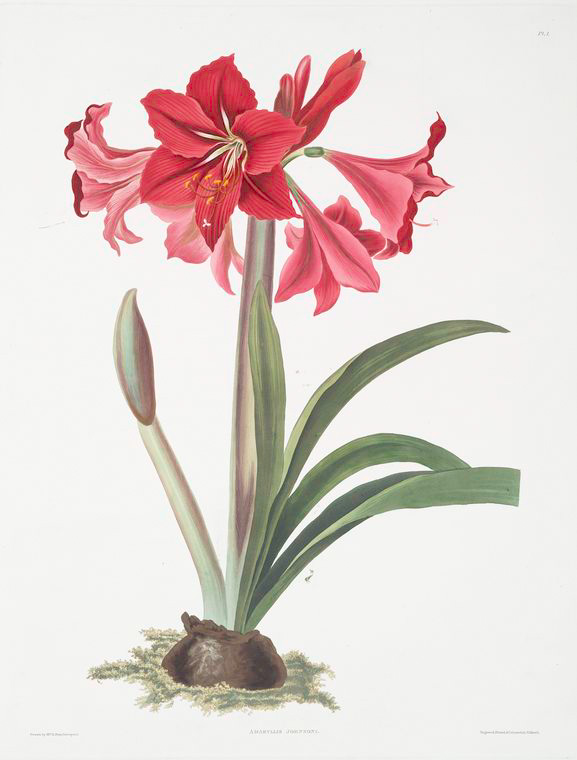
Amaryllis Johnsonii  renamed Hippeastrum johnsonii
from: Selection of Hexandrian plants, belonging to the natural orders Amaryllidae and Liliacæ, from drawings by Mrs. Edward Bury, Liverpool, 1831-1834. Havell, Robert (1793-1878) (Engraver) Source: From The New York Public Library


Historical Botanical Artists with Hippeastrum Illustrations

Historical botanical illustrations were made of this flowering plant by Les liliacées (1805-1816)  by Pierre-Joseph Redouté (1759 - 1840).


Futher Reading


Hippeastrum : The Gardener's Amaryllis, Portland : Timber Press, 2004.
"The hybrids of Hippeastrum, also known by gardeners as amaryllis, have long been popular indoor plants, their flamboyant blooms bringing cheer during the dark winter months. Published in association with the Royal Horticultural Society as part of our Plant Collector Guide series, this book for gardeners describes the astonishing range of hybrids now available and explains how to get the best results from these rewarding plants. A wealth of practical advice accompanies the plant descriptions, including a specially formulated growing medium used by the Royal Botanic Gardens, Kew, an effective "hot water treatment" for pests, and essential advice on feeding, watering, and lighting."


 ____________________________________________________________________________________
 ____________________________________________________________________________________

Thursday, November 25, 2021

FAMILY | ALSTROEMERIACEAE

__________________________________________________

Gardening | Plant ID

peruvian lilies

Alstroemeriaceae is distributed in tropical and temperate America, from Mexico to the southern tip of South America.

Peruvian lily, Lilies of the Incas (Alstroemeria aurea)
Taken April 2017:  The D
allas Arboretum and Botanical Garden


Because it has a long vase life, Peruvian lily (Alstroemeria) is often used in bouquets. It has trumpet shaped flowers, solitary or borne in umbelsPlants of this genus grow from a cluster of tuberous roots Alstroemeria was named for Baron Clas Alströmer (1736 – 1794), a Swedish naturalist who was a student of Carl Linnaeus at Uppsala University. He established a botanical garden and natural museum near Gothenburg, Sweden which was managed by the botanist Anders Dahl (the dahlia's namesake). 


References.                                                          
ITIS: Integrated Taxonomic Information Service


All material © 2021 by Hyden Photography
for 
Grassroots Horticulture
___________________________________________________

Sunday, March 21, 2021

Fronds, Ferns, Fiddleheads, and Fossils

___________________________________________________

Fronds, Ferns, Fiddleheads, and Fossils

This year I had to remove ferns encroaching on a walkway so I thought I would take photographs before digging them out. 

They are a very mysterious foliage that seemingly commit to a spot in the garden and thrive. They thrive under the Ginkgo tree, another long surviving plant.

Of course, the fiddleheads unfurl with grace,

the silent music of nature...... 


File:PSM V73 D124 Fossil fern phegopteris guyottii.png
Fossil fern phegopteris guyottii


Fern Societies                                  

          American Fern Society

Ferneries                                          

The Dorrance H. Hamilton Fernery


Botanical phylogeny chart.        

Phylogeny Chart


Trachaeophyta

Lycopodiophytes (club mosses, spike mosses, quillworts)

Euphyllophytes

Spermatophytes (seed plants)

Ferns

Psilotopsida

 Psilotales (whisk ferns) 


 Ophioglossales (grapeferns etc.) 


Equisetopsida

 Equisetales (horsetails) 


Marattiopsida


Polypodiopsida


 Hymenophyllales (filmy ferns) 


 Salviniales (heterosporous) 


 Cyatheales (tree ferns) 


DIY___________________________   

Hanging baskets and landscape plants are often overlooked as gifts in favor of floral arrangements or a dozen roses which are lovely to receive but a thoughtful gift to any gardener can be an appropriate plant from your local nursery. Once aware of the giftees needs and requirements, (hardiness zone, the home's shadiness, and a preference for wildflowers, roses, foliage plants, succulents, or orchids) a thoughtful gift can be selected readily.

If your Mother has a shady tree lined garden, and likes ferns selecting the right one is important. 

I have wood ferns and evergreen ferns in my zone 7 garden. If I lived further north I would love hanging baskets filled with ferns, but they do require more attention than I am willing to give them in the heat of the summer. Your local landscape nursery professional can direct you to the best choice for your climate.

In the previous post I treated wildflowers with an "artistic flair" and I am adding cards that you can create or use for an enclosure. This post will be about ferns with a "musical twist," with cards for enclosure that you may use or create yourself.  Of course, not everyone appreciates puns so these "ideas" are obviously not for you. If your Mom needs a new washing machine go for it, but if not, she might like a fern.


Explore Further.                       


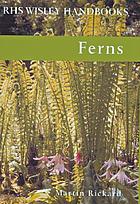
Ferns

Ferns

Author:Martin Rickard
Publisher:London : Cassell Illustrated, 2003.
Publisher Synopsis
Oft regarded as dull and Victorian, ferns could not have had a worse press. But if you have a shady corner which you can't fill, you can be sure there is a fern suitable to add presence and stateliness throughout the year. From their tightly packed fronds curled through winter in readiness for the warmer weather of spring to the gentle unfurling to reveal their summer beauty. And no, they don't all look the same. They have a diversity as wide-ranging as any genus, from the diminutive Blechnum penna-marina to the towering matteuccia struthiopteris; the delicate ash green and pink of Athyrium niponicum var. pictum, the glossy lime green of the Aspleniums; fragile Cheilanthes to the sturdy Dicksonias. Covering cultivation, which plant to choose for what situation, propagation, pests and diseases, this is part of the RHS Wisley handbook series, providing a comprehensive and concise look at ferns, fully illustrated and clearly written. Aimed at both the amateur and professional grower, this is an invaluable addition to any serious horticulturalist's bookshelf. - Lucy Watson


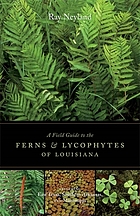
A field guide to the ferns & lycophytes of Louisiana : including east Texas, southern Arkansas, and Mississippi
Neyland, Ray. A Field Guide to the Ferns and Lycophytes of Louisiana: Including East Texas, Southern Arkansas, and MississippiBaton Rouge: Louisiana State University 


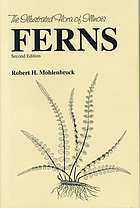
Ferns


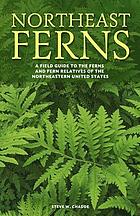
Northeast Ferns : a field guide to the ferns and fern relatives of the northeastern United States


Midwest Ferns : a field guide to the ferns and fern relatives of the north central United States


Diggs, George M, and Barney L. Lipscomb. 
The Ferns and Lycophytes of Texas. , 2014. 


Hyden Photography
 for
~Grassroots Horticulture~
2016
__________________________________________________
___________________________________________________