grassroots Horticulture

Pages

  • Home
  • Horticulture
  • Botany
  • Families
  • TEXAS GARDENS AND NATIVE PLANTS
  • Conservation
  • Design | Landscape Architecture
  • Pinterest
  • Nutrition and Health | Herbs and Produce
Showing posts with label Crinum. Show all posts

Monday, November 29, 2021

Crinums

___________________________________________________
___________________________________________________

CRinum bulbispermum

This is a variety originally from South Africa. The Sangria hybrid is sought for it's 2' maroon, strap shaped leaves and pink spring flower. 


This hybrid is also a Crinum bulbispermum but it is Crinum x powellii 'Roseum'


Crinum L.


CRINUM americanum

American crinum lily, Crinum lily

Swamp lily, Southern swamp lily, String lily, Seven sister

Blooming in my woodland backyard is the American crinum. It is known by several names including crinum lily, swamp lily, southern swamp lily, string lily, and seven sisters. It has white flowers and a honeysuckle scent, perfect for a moonlight garden.

Crinum americanum grows well in the wetlands in the southeastern United States. It spreads by large rhizomes. 


Imagine early explorer's delight finding this cluster of unusual strappy leaves growing  in boggy and swampy areas, the mystery in wondering what type of flowers they produced, if any, and then finding the beautiful, enthusiastic white clusters coming forth with what seems like hardly any effort.

 AMERICAN CRINUM LILY
Moninckx, J., 
Moninckx atlas, vol. 6: t. 29 (1682-1709)
Source: Plant Illustrations
Timeline: 1686 -1709 Amsterdam Moninckx Atlas  
Jan Moninckx (1656–1714) Maria Moninckx (1673–1757)
 CRINUM AMERICANUM
 Curtis’s Botanical Magazine, t. 1014-1059, vol. 26
(1807), Sydenham Teast Edwards (1768 – 1819)
Source: Plant Illustrations


PROPAGATION.                                                   

What on earth are Crinum bulbils you say – well they are the strange lumpy things that form on the flower heads after the flowers are finished. They are actually a type of tuber, not a seed capsule, so don’t try to open them to see what is inside. They are a very cunning method of propagation which is relatively common amongst the Crinum genus, as well as some other types of bulbs. They aren’t actually members of the Lily family, by the way, they come from the family of Amaryllis. Most crinums grow in very swampy ground, along streams and lakes, and this method of propagation is more reliable than seed, which may get washed away or drowned.


These bulbils form, as I said, at the base of the individual flower in the cluster, and there can be several on the same flower head. When the flowering is finished, the weight of the bulbils forces the stem to fall to the ground, although it is still attached to the plant, which prevents the bulbils from being washed away into deeper water or other unsatisfactory locations. By the way, this is why you find thickets of these plants growing together, in their natural environment, which can be a beautiful sight when they are in flower.


After a week or two, resting on the damp ground, the bulbils will put out a leaf and then a root and will grow on from there, to form an entirely new plant, in due course. With some crinums there can be two or three bulbils formed on one flower, with others, just one.


RESOURCES AND BIBLIOGRAPHY                          
The Pacific Bulb Society (PBS)

The bulb hunter
Wiesinger, Chris, and William C. Welch. The Bulb Hunter. , 2013.

Knight, Anthony. A Guide to Poisonous House and Garden Plants. Hoboken: Teton NewMedia, Inc, 2014. Internet resource.

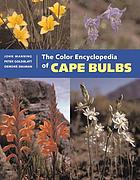
The color encyclopedia of cape bulbs
Manning, John C, Peter Goldblatt, and Dee A. Snijman. The Color Encyclopedia of Cape Bulbs. Portland: Timber Press, 2002. Print.

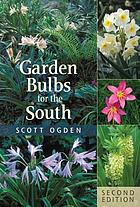
Garden bulbs for the south.
Ogden, Scott. Garden Bulbs for the South. Oregon,: Timber Press, 2013. Print.


Symbolism

Lily: Majesty, innocence, purity, and resurrection. Often associated with the Virgin Mary and resurrection. Often used on women’s graves. The use of lilies at funerals symbolizes the restored innocence of the soul at death.“The lily’s height and beauty speak command. The Jews imitated its form in the decorations of their first magnificent temple; and Christ described it as more splendid than King Solomon in his most gorgeous apparel. According to ancient mythology, there was originally but one species of Lily, and that was orange coloured; and the white was produced by the following circumstance:—Jupiter, wishing to render Hercules immortal, prevailed on Juno to take a deep draught of nectar, which threw the queen into a profound sleep. Jupiter then placed the infant Hercules at her breast, so that the divine milk might ensure immortality. Hercules drew the milk faster than he could swallow it, and some drops fell to the earth, from which immediately sprang the White Lily.”


Amaryllidaceae Family 
Resources
Pacific Bulb Society
  • Ogden, Scott. Garden Bulbs for the South. Portland, Or: Timber Press, 2007. Print.
  • Manning, John, Peter Goldblatt, and D A. Snijman.;The Color Encyclopedia of Cape Bulbs. Portland: Timber Press, 2002. Print.
  • Knight, Anthony.; A Guide to Poisonous House and Garden Plants. Hoboken: Teton NewMedia, Inc, 2014. Internet resource.
  • In the Garden, Lilies with a Legacy, A humble Southern bulb finds new respect, thanks to a Carolina plantsman, (Augustus Jenks Farmer III), author, Lotz, C. J.,  April/May 2019. URL: https://gardenandgun.com/, Garden & Gun magazine.


All material © 2007-2019 by Jeanette Hyden for Grassroots Horticulture
___________________________________________________________________________________
___________________________________________________________________________________
at November 29, 2021 No comments:
Email ThisBlogThis!Share to XShare to FacebookShare to Pinterest
Labels: Asparagales, bulb corm rhizome tuber, Bulbs - Heirloom varieties - Southern States., Crinum, Family | Amaryllidaceae, flower color: white, Themed garden | Moonlight/night/white
Location: Texas, USA

Bloomin' Crinum

___________________________________________________
___________________________________________________

Bloomin' in the dappled SHADE


Blooming in my woodland backyard is the American crinum. It is known by several names including crinum lily, swamp lily, southern swamp lily, string lily, and seven sisters. It has white flowers and a honeysuckle scent, perfect for a moonlight garden.


 My backyard is perfect for a moonlight garden including many white flowers that capture and reflect the small amount of  light available. The flowers emit lovely fragrances and the assorted herbs (mints, basils, bergamot, oreganos, sages, rosemary, lavender, and lemon grass)  produce various scents when gently brushed.  

Imagine early explorer's delight finding this cluster of unusual strappy leaves growing  in boggy and swampy areas, the mystery in wondering what type of flowers they produced, if any, and then finding the beautiful, enthusiastic white clusters coming forth with what seems like hardly any effort.


PROPAGATION                                                                    


The seed nuggets were placed on a dry medium. This emerged Mothers Day. May 8, 2022. 


MORE VARIETIES                                                          

Crinum lilies are classic, sun-loving, southern pass-along, perennial bulbs. The lilies can thrived for hundreds of years . Crinums are tough, low maintenance bulbs either in dry or in boggy soils. 

CRINUM BULBISPERMUM

This is a variety originally from South Africa. The Sangria hybrid is sought for it's 2' maroon, strap shaped leaves and pink spring flower. 


 AMERICAN CRINUM LILY
Moninckx, J., 
Moninckx atlas, vol. 6: t. 29 (1682-1709)
Source: Plant Illustrations
Timeline: 1686 -1709 Amsterdam Moninckx Atlas  
Jan Moninckx (1656–1714) Maria Moninckx (1673–1757)
 CRINUM AMERICANUM
 Curtis’s Botanical Magazine, t. 1014-1059, vol. 26
(1807), Sydenham Teast Edwards (1768 – 1819)
Source: Plant Illustrations


RESOURCES                                                                     

The Pacific Bulb Society (PBS)
The bulb hunter
  • Wiesinger, Chris, and William C. Welch. The Bulb Hunter. , 2013.
  • Lotz CJ, Lilly with a Legacy. Garden and Gun magazine, 2019


Symbolism

Lily: Majesty, innocence, purity, and resurrection. Often associated with the Virgin Mary and resurrection. Often used on women’s graves. The use of lilies at funerals symbolizes the restored innocence of the soul at death.“The lily’s height and beauty speak command. The Jews imitated its form in the decorations of their first magnificent temple; and Christ described it as more splendid than King Solomon in his most gorgeous apparel. According to ancient mythology, there was originally but one species of Lily, and that was orange coloured; and the white was produced by the following circumstance:—Jupiter, wishing to render Hercules immortal, prevailed on Juno to take a deep draught of nectar, which threw the queen into a profound sleep. Jupiter then placed the infant Hercules at her breast, so that the divine milk might ensure immortality. Hercules drew the milk faster than he could swallow it, and some drops fell to the earth, from which immediately sprang the White Lily.”


Amaryllidaceae Family 
Resources
Pacific Bulb Society
Ogden, Scott. Garden Bulbs for the South. Portland, Or: Timber Press, 2007. Print.
Manning, John, Peter Goldblatt, and D A. Snijman.;The Color Encyclopedia of Cape Bulbs. Portland: Timber Press, 2002. Print.
Knight, Anthony.; A Guide to Poisonous House and Garden Plants. Hoboken: Teton NewMedia, Inc, 2014. Internet resource.


Older Post

American crinum lily, Crinum lily

Swamp lily, Southern swamp lily, String lily, Seven sisters


All material © 2021 by Hyden Photography for
  Grassroots Horticulture
______________________________________________________________________________________________________

at November 29, 2021 No comments:
Email ThisBlogThis!Share to XShare to FacebookShare to Pinterest
Labels: bulb corm rhizome tuber, Bulbs - Heirloom varieties - Southern States., Crinum, Family | Amaryllidaceae, flower color: white, Themed garden | Moonlight/night/white
Older Posts Home
Subscribe to: Posts (Atom)

Search

Root systems of Prairie Plants

Root systems of Prairie Plants
Heidi Natura, Conservation Research Institute, 1997
grassroots Horticulture © 2020. Ethereal theme. Theme images by merrymoonmary. Powered by Blogger.