Showing posts with label Red Spider Lily. Show all posts

Monday, November 29, 2021

FAMILY | AMARYLLIDACEAE

_________________________________________________________

Gardening | Plant ID

the amaryllis family

The Amaryllidaceae are a family of herbaceous, mainly perennial and bulbous flowering plants. The family takes its name from the genus Amaryllis and is commonly known as the amaryllis family. The leaves are usually linear, and the flowers are usually bisexual and symmetrical, arranged in umbelson the stem. The petals and sepals are undifferentiated as tepals, which may be fused at the base into a floral tube. Some also display a corona. Allyl sulfide compounds produce the characteristic odor of the onion.
The family, which includes 3 sub-families:  the Agapanthoideae(agapanthus), Allioideae (onions and chives) and Amaryllidoideae (amaryllis, daffodils, snowdrops).


AMARYLLIDOIDEAE_____________Amaryllis, Hippeastrum, Crinum,   Lycoris,   daffodils, snowdrops

Amaryllis                                           

The genus, Amaryllis includes amaryllis and hippeastrum.

Spring Flowering Hardy Amaryllis 

HARDY AMARYLLIS, JOSEPH'S LILY
 HIPPEASTRUM JOHNSONII 
READ MORE


Amaryllis 'apple blossom'


Lycoris                                                

The Lycoris genus is also known as hurricane lilies or cluster amaryllis, or spider lily. 

Fall Flowering Spider Lily 

 red spider lily
 lycoris radiata
READ MORE


Crinum                                                

This is a variety originally from South Africa. The Sangria hybrid is sought for it's 2' maroon, strap shaped leaves and pink spring flower.


This hybrid is also a Crinum bulbispermum but it is Crinum x powellii 'Roseum'.

American Crinum, Fall Flowering

american cRINUM LILY 
CRINUM AMERICANUM
 read more


Hymenocallia____________________

Hymenocallis


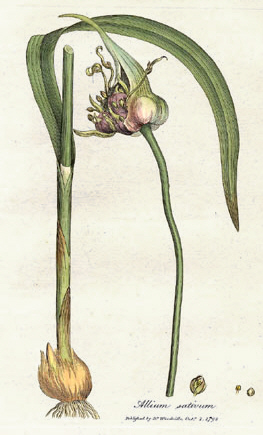
Allium (reclassified to Liliaceae


Onions Garlic Leeks


Leucojum                                            


Leucojum is a small genus of bulbous plants native to Eurasia belonging to the Amaryllis family, known as snowflakes.. 
Leucojum is a compound of Greek leukos "white" and  ion "violet". Other common names include snowbelldewdrop, and St. Agnes' flower.


AGAPANTHUS___________________


Order | Asparagales


REFERENCES
https://digitalcollections.nypl.org/search/index?utf8=%E2%9C%93&keywords=Redoute+amaryllis#
______________________________________________________
_____________________________________________________

Red Spider Lily | Lycoris radiata

__________________________________________________
Fall Flowering Amaryllis

Lycoris radiata is one of the most rewarding, reliable, and incredibly beautiful bulbs one can grow here in north Texas.  The bulb will spring forth with a stem and then flower in the fall season, sometimes in great profusion I believe the success of flowering depends on the rainfall from the previous summer. The foliage appears after the flower and almost never suffers frost damage. There are limited pests or diseases. They become dormant  in the summer as the foliage dies back.  The tall bloom stalks pop up almost overnight after the first good early autumn rains or hurricane season. They produce a dazzling display of feathery red blossoms up to 6 inches across and are a wonderful speciman for the landscape garden when little else is blooming in the autumn.
Red Spider Lily, Surprise  Lily. Hurricane Lilyy

The lycoris bulb grows to a height of 12-18 in. (30-45 cm) and should survive  in USDA Zone 7a: to -17.7 °C (0 °F) to USDA Zone 9b: to -3.8 °C (25 °F). It prefers a sunny to partial shade exposure and regular watering planted in a loose well drained soil.  It can be used as a border in front of perennial shrubs and it attracts butterflies.

The earliest reference I have found for the red spider lily growing outside it's native environment, so far, is Camden Park, Australia. Now, whether it was growing in Australia before the landing of the HMS Endeavour at Botany Bay on April 29 1770 is the question

It is believed to have been grown in Japan prior to the 19th Century.  It has been suggested that they were introduced into Japan from China along with rice cultivation.

__________________________________________________________________________

The red spider lily appears after a good rain in the fall. I have placed hundreds of  these bulbs in four large pots placed along a crescent shaped bed that rounds out a corner of our lot. I also included two

The bulbs are frost tender (7b-8a) so I am happy they have survived two years in the pots. 


In the United States Lavinia Cole Roberts is credited with sharing this beautiful bulb with other gardeners throughout the warm southern states. Lavina was the niece of Captain William Roberts. He gave her three bulbs offered to him on an expedition in 1854. Lavina's home and garden is located in New Bern, North Carolina. Details here.


Below is one of the first botanical prints I could find. It is from the publication, The Botanist Repository, published by Henry Cranke Andrews (1770 – 1830) in 1801. Andrews, through his marriage to  Anne Kennedy, was affiliated with the firm, The Lee and Kennedy Vineyard Nursery, located in Hammersmith, London. 


The Botanist Repository, published by Henry Cranke Andrews (1770 – 1830) in 1801
The second botanical print I have found, in chronological order, is the 1811 print from the Stuttgart Palace Garden by artist and publisher, Johann Simon von Kerner (1755-1830).

Kerner, J.S.,
Hortus sempervirens, vol. 29: t. 344
 (1811)
Source: Plant Illustration


The 1822 botanical art below is a print published in the Botanical Register. This time the artist is M. Hart. I have not been able to locate additional information on M. Hart but there were two botanical "Hart" artists in this area, the other artist was I.J. Hart, James McDougal Hart (1828 – 1901)). The Botanical Register, subsequently known as Edwards' Botanical Register, was an illustrated horticultural magazine that ran from 1815 to 1847. The Botanical Register was started by the illustrator Sydenham Edwards. After Edwards death, James Ridgway became publisher. Ridgway issued nine volumes between 1820 and 1828.
M. Hart
Edwards' Botanical Register
 (1822)
Source: Plant Illustration


The last botanical print is by artist, Louis Severeyns (1860).
Lycoris radiate (L’Herit.)
La Belgigue horticole, journaldes jardins et des vergers, vol. 10 (1860)
 Van Houtte, Louis (Severeyns, Stroobant and De Pannemaker)
Louis Severeyns, published in Belgium


References.                                                                  
  1. Introducing Lycoris to. U.s. Flower Lovers." Agricultural Research Washington. 53.12 (2005): 12-13. Print.
  2. Koyama, Tetsuo. The Japanese Species of Lycoris. Place of publication not identified, 1959. Print.
  3.  Hori, TA; Hayashi, A; Sasanuma, T & Kurita, S (2006), "Genetic variations in the chloroplast genome and phylogenetic clustering of Lycoris species", Genes Genet. Syst., 81 (4): 243–253, doi:10.1266/ggs.81.243, PMID 1703879 
  4. Evans, Erv & De Hertough, A.A., Lycoris radiata; Spider lily, Naked lily, Red spider lily, NC State University, archived from the original on 2011-09-13, retrieved 2011-09-13.   
  5. Klingaman, Gerald (2000), Plant of the Week : Red Spiderlily, University of Arkansas Division of Agriculture, Cooperative Extension Services         
  6. The Plant List.   
  7. Stevens, P.F., Angiosperm Phylogeny Website: Asparagales: Amaryllidoideae
  8. Kew World Checklist of Selected Plant Families.   
  9. Knox, Gary W. (2011), Hurricane Lilies, Lycoris Species, in Florida, Environmental Horticulture Department, Florida Cooperative Extension Service, Institute of Food and Agricultural Sciences, University of Florida, retrieved 2012-04-12. 
  10. Mathew, Brian (1978), The Larger Bulbs, London: B.T. Batsford (in association with the Royal Horticultural Society), ISBN 978-0-7134-1246-8.    
  11. William Herbert. 1819. Botanical Magazine 47: pl. 2113