___________________________________________________ _____________________________ Botanical Art in Culture 2016 National Museum of Scotland L'Eden Exhibit
After years of losing clay pots to freezing and cracking I found this book helpful in understanding why I should search for and select pots made from a clay with a high mineral content. Errington Reay and Company has been in business for over a century and makes salt glazed pots that withstand the humid cold of a British winter. Other historic pottery makers are Littlethorpe Potteries and The Farnham Pottery Company. In the United States, Catawba Valley Pottery of North Carolina also hosts artisans to continue the pottery creation tradition. John Burrison includes an extensive history of companies and people using clay for their art.
From the publisher:
"For over 25,000 years, humans across the globe have shaped, decorated, and fired clay. Despite great differences in location and time, universal themes appear in the world's ceramic traditions, including religious influences, human and animal representations, and mortuary pottery. In Global Clay: Themes in World Ceramic Traditions, noted pottery scholar John A. Burrison explores the recurring artistic themes that tie humanity together, explaining how and why those themes appear again and again in worldwide ceramic traditions. The book is richly illustrated with over 200 full-color, cross-cultural illustrations of ceramics from prehistory to the present. Providing an introduction to different styles of folk pottery, extensive suggestions for further reading, and reflections on the future of traditional pottery around the world, Global Clay is sure to become a classic for all who love art and pottery and all who are intrigued by the human commonalities revealed through art."
Many people are unaware of the rich cultural tradition of wild rice in the state of Michigan and the important role it played in the lives of Native Americans. The Anishinaabek people, native to the territory we now know as Michigan, celebrated wild rice, manoomin, as a sacred plant. Barbara Barton traces the history and culture, in her new book, The Story of Wild Rice in Michigan, of the spiritual importance of this grain to the Anishinaabek tribe. Discussion is given to the historic wild rice beds in Michigan. Many of the beds disappeared, over the years, as populations of Americans colonizing the mid-west expanded. As the importance of wetlands grows, tribal as well as non-tribal ecologists are setting goals to restore and protect wetlands and native species, including Manoomin. As this season rolls into a time of thanksgiving, this recollection and analysis of a time past, can remind us to take a moment to appreciate what God has provided to all of us. Thank you to Barbara Barton for her new book, The Story of Wild Rice in Michigan.
A mystery set in contemporary London with a parallel story line rooted in 17th century Holland and the tulip trade.
I have been looking for a good history of the Tulip mania phenomena in 17th Century Netherlands for a better understanding of economic bubbles. 17th century Holland was a hot bed for tulip bulbs. The most highly prized and sought after tulips, with their beautiful color combinations and unique markings, were actually a result of a virus. The time periods, current day London and the 17th century, are tied together DNA - Jurassic Park style, and examines questions of free will, science, religion, and greed.
The author has obviously done quite a lot of research and included a great deal about tulip cultivation and trade. The author, who is Dutch herself, has taken Tulip mania into the modern day with this mystery. At times I thought some things were lost in the Dutch to English translation but enjoyed the history veiled in a mystery.
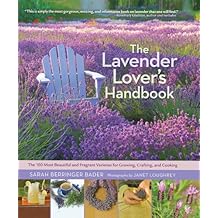
The lavender lover's handbook: the 100 most beautiful and fragrant varieties for growing, crafting, and cooking by sarah berringer bader
Sarah Berringer Bader has farmed lavender in the Northwest for over 10 years. Her experience and knowledge are presented in this comprehensive guide to growing, crafting and cooking many varieties of lavender. The Lavender Lover's Handbook provides a complete checklist of the foliage colors (5 shades), flower colors (14 choices), and fragrance (she recommends the strong scent of the 'Hidcote Giant' lavender that I grow, yea). She dedicates a chapter each to culture (planting, spacing, soil, watering, hardiness zone, and pruning), cuisine with recipes, and crafting. So, it is not only a practical guide for growing success but it includes inspirational uses so you and your friends might enjoy it throughout the year. The photographs by Janet Loughrey, are beautiful and extensive, including all 100 covered varieties of lavender. As well as being well indexed, Bader includes an international resource list complete with lavender festivals, associations, farms, and mail-order companies to order your favorite varieties. The Lavender Lover's Handbook is an indispensable resource to inspire and to add to your garden library for both experienced gardener or novice.
Copyright law can be a bit tricky but generally, often after 70 years books lose the copyright that protects the author. Works published after 1923, but before 1978 are protected for 95 years from the date of publication. Often the books are "dated" but they are just as often worth a thorough perusal with the caveat, that cultural practices could be "dated". If you have always disliked wasps, reading Wasps and Their Ways could give you a better understanding of why God put them here with us. Here are a few gardening books available electronically from Kellcraft Studios.
American Flower Garden, The. Neltje Blanchan. NY: Doubleday, Page and Company. 1909.Arts and Crafts period in NY. Chapters include: Vines, Roses, Annuals, Garden Furniture, etc.
Geraldine Brooks grew up in Australia and worked as a journalist. In her novel, People of the Book;a white hair, an insect wing, missing clasps, a drop of salt, and a wine stain lead an Australian, rare book conservator throughout the world and backward in time in an intriguing forensic adventure. Great summer reading.
Abstract:
When Hanna Heath gets a call in the middle of the night in her Sydney home about a precious medieval manuscript which has been recovered from the smouldering ruins of war-torn Sarajevo, she knows she is on the brink of the experience of a lifetime. A renowned book conservator, she must now make her way to Bosnia to start work on restoring The Sarajevo Haggadah, a Jewish prayer book -- to discover its secrets and piece together the story of its miraculous survival. But the trip will also set in motion a series of events that threaten to rock Hanna's orderly life, including her encounter with Ozren Karamen, the young librarian who risked his life to save the book.
The History of Landscape Design in 100 Gardens Chisholm, Linda A, and Michael D. Garber. 2018 The History of Landscape Design in 100 Gardens explores the key moments in garden design. Through profiles of 100 of the most influential gardens, Linda Chisholm explores how social, political, and economic influences shaped garden design principles. The book is organized chronologically and by theme, starting with the medieval garden Alhambra and ending with the modern naturalism of the Lurie Garden. Sumptuously illustrated, The History of Landscape Design in 100 Gardens is for garden designers and landscape architects, design students, and gardening enthusiasts interested in garden history."