Showing posts with label Themed garden | Butterfly garden. Show all posts

Wednesday, September 15, 2021

Milkweed for Monarch Larvae

___________________________________________________
___________________________________________________

Gardening for Butterfly Larvae

CREATING a haven for butterflies

Monarch Specific Food
FWBG, BRIT, Fort Worth, Texas                                                                       Photograph: Jeanette Hyden
Green Milkweed, Antelope horn milkweed  (Asclepias viridis)


Milkweed is a host plant to the Monarch butterfly larvae. The butterfly larvae feeds on the leaves. 

Green milkweed or antelope horn milkweed, above, after it has flowered and created pods. The pods are usually erect, 2 ½ -5 in (6-13 cm) long and ½ – ¾ in (1-2 cm) wide. 
FWBG, BRIT, Fort Worth, Texas                                                                                     Photograph: Jeanette Hyden
Green Milkweed, Antelope horn milkweed  (Asclepias viridis)
A silky, hair-like structure assists in dispersing the seeds when the pods break open.

I have milkweed growing in my backyard for the monarch butterfly larvae. You can plant it in the spring from seed or buy it in the spring because many nurseries are now carrying several varieties. It is very important to select the correct variety of milkweed for your state.
Local County Extension offices or State Agricultural Schools can offer specific instructions for selecting varieties for your hardiness zone.  Links: Examples by State Texas | Use: Green Milkweed, Antelope horn milkweed  (Asclepias viridis), California Xerces Society, Michigan.


Description___________________________________

Milkweed is found in the Apocynaceae family, (the family etymology is derived from the Greek, Apocynum, meaning, "dog-away"), dogbane family.
The Milkweed flower is called an umbellate cymes


Milkweed seedpod


The most common methods of seed dispersal for plants are wind, water, animals, explosion and fire. When the milkweed follicle breaks open the seeds are transported by the wind as the breeze blows the hairlike comas to more distant locations.

                                    
Milkweed seedpod, a follicle


The seeds, each with long, white flossy hairs (coma), occur in the follicle seedpod and are dispersed after the pod breaks open and the wind carries the seed away.


Milkweed


Slim-leafed milkweeds:


Whorled milkweed Asclepias verticillata --- Identifyng features: whorls of leaves. Usually three to five leaves per junction, but may have mostly pairs with a few whorls. Flowers white with neck and long horns.


Slim milkweed, Asclepias linearis— Identifyng features: Paired opposite leaves: Never whorled leaves, flowers much like verticillata, white with neck and long horns at center of hoods


Narrow-leaved milkweed, Asclepias stenophylla--- Identifyng features: Alternate leaves, or sometimes opposite leaves: (regular sized plant) Never whorled leaves, flowers neckless, hoods have little protrusions but  not  centered  long  horns. Flowers whitish, but not as white as vertcillata or linearis—more green.


 Woodson Engelmann's Milkweed, Asclepias engelmanniana--- Alternate to almost opposite leaves: (long slim plants up to 48”, and leaves narrow and widely spaced)  Flowers green with small or no horns  on hoods. Leaves droop and may curl or twist. Leaves can be 8” or more long. (Linearis and stenophylla look a lot like verticillata with small differences in leaves and flowers (best seen in closeup for differences)

Engelmanniana looks weird—long and leggy with drooping twisting leaves. Its flowers are almost same as A. stenophylla.)


Not Slim-leafed milkweeds:

Butterfly weed, Asclepias tuberosa--- Identifyng features: has orange/yellow flowers, and stiff, hairy stems and leaves, prefers acid soils.


Green milkweed, Asclepias viridiflora--- Identifyng features: has flower clusters that hang down, hoods clasp crown—color and leaves vary a lot


Antelope-Horns Milkweed, Asclepias asperula--- Identifyng features: A. asperula and Asclepias viridis are very similar in flower, with spreading club shaped hoods, but A. asperula has narrower, pointed leaves and a sprawling habit, and more maroon on hoods. A. viridis has oval leaves and is more upright, with lavender hoods. The hoods on A. asperula go all the way to the ends of the petals, but hose on A.  viridis stop well inside the edge of the flower.


Sidecluster Milkweed, Zizotes Milkweed, Asclepias oenotheroides --- Identifyng features: Recently found in Collin County, more common in the western 2/3 of Texas. Upright to sprawling habit with single or multiple stems. Flowers greenish, in loose clusters, have hoods (with horns) that extend well above the gynostegium. Plant smells strongly of burnt rubber when touched.


More information, go to:                           


 References                                                             
 ITIS Integrated Taxonomy Information System

___________________________________________________
All material © 2021 Hyden Photography 
for
 __________________________________________________

Friday, August 13, 2021

Themed Gardens | Interactive and Storybook Children's Garden Ideas

__________________________________________________________________________
__________________________________________________________________________


I visited the Children's Garden on the campus at Michigan State University in East Lansing, Michigan. This was one of the earliest Children's gardens.
                                                                                                                                                                           
Michigan 4-H Groups were integral in the inspiration and design of the garden


As you take a journey along the path throughout the garden you find several aspects to create curiosity and spark the senses.


Splashes of color, wildlife topiaries add form and interest, and generous plantings of fuzzy leafed lambs ear add tempting texture.


An open gate in The Secret Garden entices visitors to explore the maze filled with storybook characters from Alice's Adventures in Wonderland.


The Cheshire cat and other characters greet you at every turn in the maze.


Concepts such as direction, time, and environmental impact are exhibited in a compass and tree growth rings.


Housing design, using basic natural elements.


RecommendeReferences.                                                

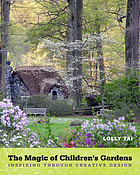
The magic of children's gardens : inspiring through creative design


Tai, Lolly. 
The Magic of Children's Gardens:
 Inspiring Through Creative Design
2017
"Landscape architect Lolly Tai provides the primary goals, concepts, and key considerations for designing outdoor spaces that are attractive and suitable for children, especially in urban environments. Tia presents inspiring ideas for creating children's green spaces by examining nineteen outstanding case studies"--
The Foodscape Revolution: Finding a Better Way to Make Space for Food and Beauty in Your Garden
Arthur, Brie. 
The Foodscape Revolution: 
Finding a Better Way to Make Space for Food and Beauty in Your Garden
 2017.

 
Jekyll, Gertrude. 
Children and Gardens. 
Amsterdam, The Netherlands: Fredonia Books, 2004.

Children's gardens
Howard, Edwin L. 
Children's Gardens. 
Yardley, Penn: Westholme, 2007.


Themed Gardens including discovery gardens,  fairy gardens, and gardens for the senses.

Butterflies, a Compilation

 __________________________________________________________________________________

Fritillary Butterfly on Mexican Sunflower
 Tithonia of the Asteraceae Family 


Porterweed and Passion Fritillary


Sulfur Butterfly on Hummingbird Bush 


Hairsteak and Purple Coneflower at the Lavender Farm, June 16, 2018


Monarch or Queen
June 16, 2018 Lavender Farm 


Monarch, Queen or Viceroy
Monarch or Queen
June 16, 2018 at the Lavender Farm  


Red Admiral (Vanessa atalanta)
Purple Butterfly Bush (Buddleia 'Lo and Behold Blue Chip') Hybridized


Crescent on Blackfoot Daisy


Crescent on Blackfoot Daisy


Pearl Crescent
 on Blackfoot Daisy


Pearl Crescent and Silvery Checkerspot, Chlosyne nycteis are similar.


There is nothing more delightful than watching a butterfly skip along a flower bed on a warm summer day. I have a carpet of perennials that bloom from March through Winter. The first blush is a mix of Louisiana Phlox and purple Iris. After these fade the Purple Coneflower comes on full strength and tolerates that early summer heat and then the blue mistflower covers as the coneflower fades. All of these flowers have colors that produce that Ah feeling of relaxation as you passively enjoy your butterflies after a long day at work. 

Nectar Plants

These are the plants that the adult butterflies feed on. These flowers contain nectar which is basically sugar water. The nectar is vital to the survival of the butterfly.


Bee Balm. Bee Balm or monarda is a tall and very showy plant. The Peter's Purple variety does well along the outer edge of the butterfly garden. It is a great perennial, flowering in the early spring (April). It does seem to attract more bees than butterflies but butterflies are attracted to masses of color and this is an entire cheer leading squad of purple pom poms. 

Four O'clock. Easy to start from seed is the characteristic that jumps first to mind when considering this perennial. Four O'clock plants are a tall forb with a surprising feature, the flower color can be yellow, white, red or magenta or a combination of these colors. Mirabilis jalapa, Mirabilis means wonderful. Native of Peru.  


Flame Acanthus. Hummingbird bush has a red tubular flower. The shrub is deciduous. Since hummingbirds tend to be territorial the feeding function of this flower is generally reserved for the hummingbird from my observations.


Joe-Pye Weed. A tall forb, joe-pye weed is located in a back corner of my yard. 


Lantana. Several lantanta in gold and red form a mass of color to attract butterflies in a full sun setting.
Lantana urticoides, also known as West Indian shrubverbena, Texas lantana or calico bush, is a three- to five-foot perennial shrub that grows in Mexico and the U.S. states of Texas, Louisiana and Mississippi especially along the Gulf coast. The plant can blossom from spring until the first frost. It is a species of flowering plant within the verbena family, Verbenaceae.


Passion Flower. This vine hosts the larvae of Gulf Fritillary or Passion Butterfly (Agraulis vanillae). 


Purple Coneflower. Grown enmass, for May nectar. Easy to start from seed and tolerates many soil types and water restrictions.


Echinacea  A genus or native perennials of the Asteraceae (Aster Family)  Attracts butterflies all summer long - A favorite flower of the Monarch butterfly. - Easy sowing, germinating and growing - Heat tolerant.


Dotted under the native oaks are five mature abelia shrubs. When Jack, Sadie and I take our morning stretch I enjoy waking to the soft floral scent of the abelias. Jack and Sadie are on the trail of nocturnal invaders, usually our nemesis, the squirrels. Sometimes those noses smell bacon frying at the neighbors house as their minds shift to breakfast ideas for themselves. 


Monarchs
Butterflies prepare for the remainder of their journey and a new generation.


Monarch Butterfly preparing to lay eggs on the back of a milkweed leaf. In a few days the tiny larvae will emerge and begin devouring the milkweed leaves.


Black Swallowtail Butterfly | Papilio polyxenes

Favorite Nectar Plants:  Nectar from flowers including red clover, milkweed, penta, and thistles.

Black Swallowtail,  Papilio polyxenes  

Pink Penta Flowers


The Caterpillar
When they emerge from the egg, black swallowtail caterpillars are small, brownish and hairy. They later develop a white stripe and resemble bird droppings, which makes them easy to miss. More mature caterpillars (later "instars") develop a striking black and white stripe with a pattern of yellow blotches and can grow to as much as 2 inches in length. Like other swallowtail caterpillars they have a distinctive horn-like structure behind their heads that they will raise if they feel threatened.


Host Plants for the Black Swallowtail Caterpillar
Fennel, parsley, dill, rue
Leaves of plants in the parsley family (Apiaceae) including Queen Anne's Lace, carrot, celery and dill. 
Fennel is a food plant consumed by the caterpillars of the black swallowtail butterfly. Swallowtails are the largest species of butterfly in the Unites States and among the most beautiful.The black swallowtail is so widespread that it is sometimes known as the American swallowtail.


Fennel
The fennel plant, also known as Foeniculum vulgare, grows natively in the Mediterranean and is cultivated throughout the world in temperate regions. A tender perennial, fennel plant reaches up to 5 feet in height and produces aromatic leaves and seeds often used for culinary purposes. Fennel self-seeds easily and typically reaches maturity in about 100 days. Gardeners also value the plant for its ability to attract beneficial insects to the garden, particularly the caterpillar of swallowtail butterflies. Hardy in zones 5 through 10, fennel requires only minimal care to grow and thrive in most areas of the United States.
Place your fennel plant in an area that receives at least six hours of full sunlight each day. Provide high-quality, well-drained potting soil if growing in a container, or well-drained garden soil if growing in the ground. Plant in spring after all threat of frost is over. Space fennel plants at least 12 inches apart.
Water once or twice per week as necessary to keep the soil slightly moist. Fennel plant tolerates drought but performs best when watered regularly. During extreme heat, container-grown plants may require daily watering. Never allow the soil to dry out completely.
Stake the fennel plant if it's growing in a windy location to prevent damage. Once the plant reaches 18 inches in height, place a stake in the ground and use garden twine to loosely secure the plant's stalk to the stake. This will prevent it from falling over during heavy winds.
Apply a 4-inch layer of organic mulch over the soil surrounding fennel plant in late fall, just before the first frost of winter in your area. This will prevent the plant from sustaining cold damage. Remove the layer in spring after all danger of frost has passed to allow new growth.
Prune fennel plant to the ground after the first hard freeze of the year. This will help the plant survive winter. Cut back branches by several inches throughout the growing season to promote a bushier growth habit, if desired.
Remove faded or dying flowers from your fennel plant, a process known as deadheading, to prevent aggressive re-seeding. Allow some flowers to remain and turn to seed to replace plants that die, but remove most flowers for the best results.

CHRYSALIS 
Once the butterfly emerges from the chrysalis it will take about 1-2 hours for it's wings to expand. It is rewarding to watch the butterfly emerge from the chrysalis.  If you find a chrysalison a plant, bring it inside your home put it at eye level so you can observe it. You will see it change colors before it emerges. You might even be able to see the wings through the chrysalis before it is ready to emerge. Keep it away from pets. The chrysalis should hang downward from where it is attached to the plant. You can make a safe house from pvc pipe and 8 corner pieces and draw a mesh laundry bag over the pvc frame. Or.... you can simply tape the plant over the desk where you work with the chrysalis hanging down and observe it that way. When it emerges it needs something to hold onto while it's wings expand. Be gentle with it for placement outside. The swallowtail is generally in the chrysalis 7 days before it emerges.


Black Swallowtail-female 
(Papilio polyxenes)
 Black Swallowtail and Peter's Purple Monarda

Gulf Fritillary | Passion Butterfly
Agraulis vanillae


Lantana camara, nectar host plant for butterflies

Gulf Fritillary
(Agraulis vanillae) 

Ventral (underside) view


Common Buckeye (Junonia coenia)


Buckeye Butterfly
 

The Buckeye Butterfly, Junonia, likes open areas with low vegetation and some bare soil. Junonia are commonly known as Buckeyes, Pansies, or Commodores.


Host Plants for Buckeye Caterpillar: Plants from the Plantain family (Plantaginaceae),  including Angelonia (Angelonia), snapdragon (Antirrhinum), toadflax (Linaria), and plantains (Plantago); and the Acanthus family including ruellia (Ruellia). Drummond's ruellia or Drummond's wild petunia (Ruellia drummondiana)  is a Texas native that will host the larvae of the Buckeye Butterfly. LBJWC


Once the larvae have formed a chrysalis and matured it will emerge as a butterfly seeking nectar plants. Favorite nectar sources are composites including asters, chickory, gumweed, knapweed, and tickseed sunflowers


BUTTERFLIES IN TEXAS AND WHAT THE EAT


Butterflies
American Lady (Vanessa virginiensis)
American Snout (Libytheana carinenta)
Black Swallowtail (Papilio polyxenes)
Brazilian Skipper (Calpodes ethlius)
Broad-winged Skipper (Poanes viator)
Carolina Satyr (Hermeuptychia sosybius)
Ceraunus Blue (Hemiargus ceraunus)
Clouded Skipper (Lerema accius)
Cloudless Sulphur (Phoebis sennae)
Cobweb Skipper (Hesperia metea)
Common Buckeye (Junonia coenia)
Common Mestra (Mestra amymone)
Common Sootywing (Pholisora catullus)
Dainty Sulphur (Nathalis iole)
Delaware Skipper (Anatrytone logan)
Dotted Skipper (Hesperia attalus)
Dun Skipper (Euphyes vestris)
Dusky-blue Groundstreak (Calycopis isobeon)
Eastern Comma (Polygonia comma)
Eastern Tailed-Blue (Cupido comyntas)

Eufala Skipper (Lerodea eufala)
Falcate Orangetip (Anthocharis midea)
Fiery Skipper (Hylephila phyleus)
Funereal Duskywing (Erynnis funeralis)
Giant Swallowtail (Papilio cresphontes)
Goatweed Leafwing (Anaea andria)
Gorgone Checkerspot (Chlosyne gorgone)
Graphic Crescent (Phyciodes graphica)
Great Purple Hairstreak (Atlides halesus)
Gulf Fritillary (Agraulis vanillae)
Hackberry Emperor (Asterocampa celtis)
Hayhurst's Scallopwing (Staphylus hayhurstii)
Henry's Elfin (Callophrys henrici)
Horace's Duskywing (Erynnis horatius)
Juniper Hairstreak (Callophrys gryneus)
Juvenal's Duskywing (Erynnis juvenalis)
Large Orange Sulphur (Phoebis agarithe)
Little Wood Satyr (Megisto cymela)
Little Yellow (Pyrisitia lisa)
Long-tailed Skipper (Urbanus proteus)
Monarch (Danaus plexippus)
Morning-glory Prominent (Schizura ipomoeae)
Northern Cloudywing (Thorybes pylades)
Northern Sicklewing (Eantis tamenund)
Orange Skipperling (Copaeodes aurantiaca)
Orange Sulphur (Colias eurytheme)
Pearl Crescent (Phyciodes tharos)
Phaon Crescent (Phyciodes phaon)
Pipevine Swallowtail (Battus philenor)
Queen (Danaus gilippus)
Question Mark (Polygonia interrogationis)
Reakirt's Blue (Echinargus isola)
Red Admiral (Vanessa atalanta)
Red-banded Hairstreak (Calycopis cecrops)
Sachem (Atalopedes campestris)
Silver-spotted Skipper (Epargyreus clarus)
Silvery Checkerspot (Chlosyne nycteis)
Sleepy Orange (Abaeis nicippe)
Southern Broken-Dash (Wallengrenia otho)
Southern Cloudywing (Thorybes bathyllus)
Southern Dogface (Zerene cesonia)
Southern Hairstreak (Satyrium favonius)
Southern Skipperling (Copaeodes minima)
Tawny Emperor (Asterocampa clyton)
Texan Crescent (Anthanassa texana)
Viceroy (Limenitis archippus)
Western Pygmy-Blue (Brephidium exilis)
Zebra Heliconian (Heliconius charithonia)

Caterpillar  Plants

Althea
Asclepias (milkweed)
Blue Bonnets
Clover
Catalpa
Dill
Esperanza
Fennel
Hackberry
Holly
Ironwood
Lantana
Mallow
Mullein
Oak
Parsley
Passionvine
Pipevine
Redbud
Snapdragon Vine
Sumac
Sunflower
St. Augustine
Texas Persimmon
Thistle
Wax Myrtle
Willow
Wooly Croton


Nectar Plants

Aster
Butterfly Bush
Clover
Echinace
Lantana
Marigold
Milkweed
Thistle
Verbena
Vetch


REFERENCES 

http://dallasbutterflies.com/Butterfly%20Gardening/Host%20Plants%20by%20Butterfly%20Species.htm?fbclid=IwAR24_8ZgsetmMJNqR2Je9HrMDsx_J2017Duc2rzE-HZF2VhSEd49zrPNJHI


___________________________________________________
 __________________________________________________