Showing posts with label Season | Winter. Show all posts

Sunday, November 28, 2021

DECEMBER


If you would like to create a heartfelt and homemade gift for your favorite gardener  feel free to use one of these three calendar photos to start an annual garden journal, calendar, or scrapbook page. You can then use your own photographs or monthly photographs below to complete the project.

Capsicum

Camellia


December Inspiration
This beautiful botanical art tempera is part of a monthly series of natural art by the British artist, Eliot Hodgkin (1905-1987). The Ramsbury Manor Foundation. He celebrated seasonal flowers, leaves, berries, and seed pods from each month in the compositions of his art work.

THE MONTHS - DECEMBER
ELIOT  HODGKIN
1950


References.                                                             

Richter, Robert S. Texas Month-by-Month Gardening: What to Do Each Month to Have a Beautiful Garden All Year. , 2015. Internet resource.


Gill, Dan, and Dale Groom. Month-by-month Gardening in Texas: What to Do Each Month to Have a Beautiful Garden All Year. Franklin, Tenn: Cool Springs Press, 2006. Print.


The Months in Photographs.  


 __________________________________________________
Hyden Photography for 
Grassroots Horticulture __________________________________________________

Friday, October 29, 2021

Winter Flowers | Helleborus

______________________________________________________
______________________________________________________
Helleborus

Helleborus with its various different species  belongs to the buttercup (Ranunculaceae) family, along with other popular genera, such as clematis (Clematis), delphinium (Delphinium) and globeflower (Trollius).


Helleborus is a miraculous winter flowering plant. It joins the pansy, ornamental kale, camelia, berried shrubs and brilliant twigs like red osier dogwood as top choices to add to our gardens for winter color.

Kym Pokorny wrote a lovely article, "Hooked on Hellebores" in the November/December 2014 American Gardener magazine. She features Oregon Helleborus breeders, Ernie and Marietta O'Byrne and their accomplishments introducing new colors to the public.


Helleborus


Helleborus 'Shooting Stars'


Burrell, C C, Judith K. Tyler, Richard Tyler, and Daniel J. Hinkley. Hellebores: A Comprehensive Guide. Portland, Or: Timber Press, 2007. Print.


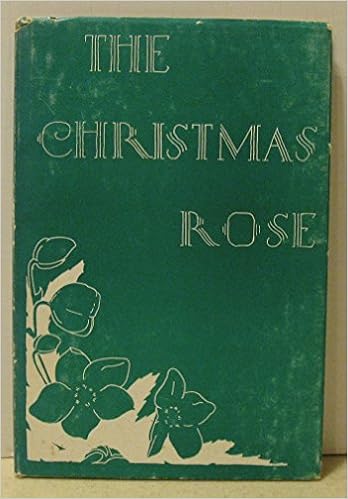
Luedy, Arthur E, and Mildred V. Luedy. The Christmas Rose. Bedford, Ohio: Arthur E. Luedy, 1948. 


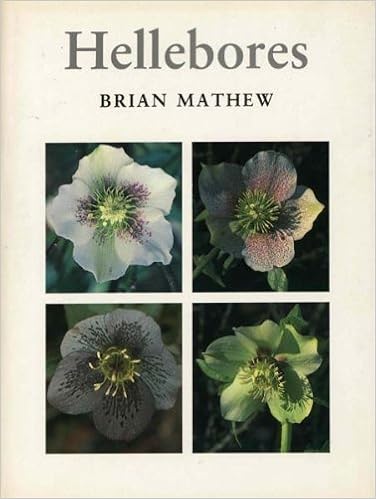
Mathew, Brian. Hellebores. Woking: Alpine Garden Society, 1989. Print.
The Gardener's Guide to Growing Hellebores
Rice, Graham, and Elizabeth Strangman. The Gardener's Guide to Growing Hellebores. Newton Abbot, Devon: David and  Charles, 2005. Print.
Rice, Graham: Helleborus, Octopus Publishing Group Limited, London, 2008


Tuesday, October 12, 2021

Theaceae | Winter Flowers | Camellias

______________________________________________________
______________________________________________________
Winter is their time to shine. Clothed in lustrous, dark green foliage, Camellias are natives of Japan and China. They produce large, elegant, rose-like blossoms that range in color from pale ivory to shell pink to glistening crimson. The flowers come in a variety of shapes and sizes. They may be single, semi-double, anemone form, peony form, rose form double, and formal double. 


Bonanza camellia (Camellia sasanqua 'Bonanza') 


Bonanza camellia (Camellia sasanqua 'Bonanza') 


Camellia japonica 'R.L. Wheeler'

Professor Sargent camellia (Camellia japonica 'Professor Sargent')


Camelia are not just plants with beautiful flowers but Camellia sinensis is a species of evergreen shrubs or small trees inthe flowering plant family Theaceae whose leaves and leaf buds are used to produce tea. Twinings is an old British tea company with a long history.

REFERENCES.                                    

for
______________________________________________________
________________________________________________________________________________

Wednesday, September 29, 2021

Cactus

__________________________________________________________________________
__________________________________________________________________________

Gardening for the Holidays

CREATING a lovely site for YOUR  CACTUS


 Thanksgiving cactus, False Christmas cactus, Holiday cactus
 (
Schlumbergera truncate)


 Thanksgiving cactus, False Christmas cactus, Holiday cactus
 (
Schlumbergera truncata) 

Schlumbergera truncata resembles other species of the genus Schlumbergera in that it has leafless green stems which act as photosynthetic organs. The stems (cladodes) are composed of strongly flattened segments, which have two or three "teeth" of varying shapes along their edges and at the ends. The ends of the stems are "cut off" (truncated) rather than pointed. Individual segments are about 4–6 cm (1.6–2.4 in) long by 1.5–3.5 cm (0.6–1.4 in) wide. You will see the Christmas cactus in the stores in a small pot. The stems will be almost upright and this is to protect the stems and blooms from damage during shipping.  This is what my cactus looked like a few years ago. This cactus is actually a Thanksgiving cactus because it blooms a bit earlier than the true Christmas cactus (Schlumbergera bridgesi ). The Thanksgiving cactus have a pointed leaf and the Christmas cactus stems are more rounded.


The cactus is very easy to care for after it completes it's show. In March I place it on our porch. It faces southward but protects plants from the burning afternoon sun. You will need a site rich with sunshine but mottled to prevent burning. Ideal temperatures are between 55 and 68 degrees. I water once or twice a week in the summer. The Christmas cactus is native to South America. It grows in trees, and is considered an air plant, where it receives mottled sunlight. If we are expecting a freeze  in zone 7b-8a I bring it inside.

If the stems are layered, the flowers will cascade as in this photograph.


Propagation
Plant the "stems" directly into a slightly acidic, well draining soil and allow the soil to dry between watering. Growing and flowering instructions change dramatically depending on latitude. You will want to check with your local Agricultural Extension Office for specific instructions to ensure flowering in December. I don't normally place potted plants on furniture without a saucer to catch water but this is a temporary site for the picture. You do not want a saucer under your pot because the roots will rot readily. The flowers are available in red and this magenta pink. I like to place the pot at an eye level location to show off the flowers when they are in bloom and this also serves to keep it from spirited wagging puppy tails. 


Color
The flower on this cactus is a vibrant magenta. I have added a seafoam green wrap, as a complementary color around the pot to make the colors pop. The combination is very pleasing.


Here, I have placed the cactus with a Mid-century modern ('50's), seafoam green opalescent Fostoria Heirloom epergne. The seafoam green is a great complement to the magenta bloom.


The buds are prolific at Thanksgiving time and many of the flowers are  in full bloom at this time.


Christmas Cactus (Schlumbergera bridgesi )

I like to include live plants with Christmas decorations. After the cactus has completed it's bloom cycle I let it rest in a protected site with good sunlight but protected from the cold. In March, after our last frost I put it back outside on the front porch with a southern exposure. 


The Christmas cactus includes many cultivars of the genus Schlumbergera. There are a number of cultivar groups, including the Buckleyi Group, whose cultivars show inheritance from Schlumbergera russelliana (pictured). ðŸŒµðŸŽ„

Illustration by Walter Hood Fitch for "Curtis's Botanical Magazine", v. 66 (1839-40), freely available in BHL thanks to Missouri Botanical Garden  https://s.si.edu/2EwjIy0

"Curtis's Botanical Magazine" is the longest running color-illustrated periodical. It was first published in 1787 by William Curtis as an illustrated gardening and botanical journal. In 1826, William Hooker, the first official director of Kew Gardens, became the editor of the journal. During this time, William hired the artist Walter Hood Fitch to serve as the magazine's principal artist.

In 1865, Joseph Dalton Hooker became Director of Kew Gardens and editor of "Curtis's Botanical Magazine". In 1877, after contributing over 2,900 illustrations to the magazine, Fitch resigned following a dispute with J.D. Hooker. Hooker's daughter, Harriet Ann Thiselton-Dyer, served as the magazine's illustrator until Matilda Smith was hired as the official illustrator. Smith eventually became the first official botanical artist employed by Kew, the first woman to be appointed president of the Kew Guild, and the second woman to be elected an associate of the Linnean Society of London. She continued as the magazine's chief illustrator until her retirement in 1921. Many of Smith's illustrations were lithographed for publication by Fitch's nephew John Nugent Fitch.

Image may contain: plant and flower


 ____________________________________________________________________________________
 ____________________________________________________________________________________

Wednesday, September 22, 2021

Fava Beans | Vicia faba

___________________________________________________
___________________________________________________

Plant ID | broad beans


Broad beans are generally eaten while still young and tender, enabling harvesting to begin as early as the middle of spring for plants started under glass or overwintered in a protected location, but even the main crop sown in early spring will be ready from mid to late summer. Broad beans were a major food of old Mediterranean civilizations, particularly for the Romans and Greeks.


Beans and peas are jam packed with nutrition. Sometimes referred to as pulses (meaning thick soup), dried beans are a good source of protein. Introduce yourself to pulse recipes for wholesome winter goodness at this link.

 
Fava beans, mature seeds, raw
Nutritional value per 100 g (3.5 oz)
Energy1,425 kJ (341 kcal)
Carbohydrates
58.29 g
Dietary fiber25 g
Fat
1.53 g
Protein
26.12 g
VitaminsQuantity%DV†
Thiamine (B1)
48%
0.555 mg
Riboflavin (B2)
28%
0.333 mg
Niacin (B3)
19%
2.832 mg
Vitamin B6
28%
0.366 mg
Folate (B9)
106%
423 μg
Vitamin C
2%
1.4 mg
Vitamin K
9%
9 μg
MineralsQuantity%DV†
Calcium
10%
103 mg
Copper
41%
0.824 mg
Iron
52%
6.7 mg
Magnesium
54%
192 mg
Manganese
77%
1.626 mg
Phosphorus
60%
421 mg
Potassium
23%
1062 mg
Selenium
12%
8.2 μg
Sodium
1%
13 mg
Zinc
33%
3.14 mg


________________________________________________________________________

Bibliography______________________________________________________________

Dry beans and pulses : production, processing and nutrition
Siddiq, Muhammad. Dry Beans and Pulses: Production, Processing and Nutrition. Ames, Iowa: Wiley-Blackwell, 2013. Print.