Showing posts with label Family | Ranunculaceae. Show all posts

Friday, October 29, 2021

Family | Ranunculaceae

______________________________________________________
______________________________________________________
Clematis________________


Clematis


Sweet Autumn Clematis
 (Clematis paniculata)

Anemone________________________


Thimbleweed (Anemone)


Nigella________________________


 Love-in-a-mist (
Nigella damascena)


Seed Pod
Love-in-a-mist (Nigella damascena)


Aquilegia________________________


Columbine (Aquilegia) 


Hellebores________________________


Lenten rose (Hellebores) 


Delphinium_____________


Larkspur (Delphinium)


Medicinal plant illustrations 


Delphinium Staphysagria L., (Delphinium staphisagria)

Franz Eugen Köhler’s Medizinal-Pflanzen or Medicinal Plants


Taxonomy

Family: FAMILY | RANUNCULACEAE

Family Common Name: Buttercup Family

Kingdom: Plantae

Clade: Tracheophytes

Superdivision/Superphylum:

Division: Angiosperm

Class: Eudicots

Subclass:  basal eudicots

Order: Ranunculales

 Family: FAMILY | RANUNCULACEAE

Genera, subfamilies and tribes: Anenome, Aquilegia, Clematis, Delphinium, Hellebores, Nigella, Ranunculus

Species:


©2021 Hyden  Photography 
for 
grassrootsHorticulture

___________________________________________________
___________________________________________________

Blue for a Cottage Garden | Nigella damascena

_________________________________________________ ___________________________________________________

Gardening | Plant ID

nigella

Nigella is a genus of attractive hardy annual herbs of the Buttercup Family, with blue, yellow, or white flowers, and very finely cut foliage, which probably suggests the common name, Fennel-flower. It is also called Love-in-the-mist and will be forever linked to Gertrude Jekyll.


Alice Morse Earle wrote of this mysterious plant in Old Time Gardens:

"I join with Dr. Forbes Watson in finding the Nigella uncanny. It has a half-spidery look, that seems ungracious in a flower. Its names are curious: Love-in-a-mist, Love-in-a-puzzle, Love-in-a-tangle, Puzzle-love, Devil-in-a-bush, Katherine-flowers—another of the many allusions to St. Katherine and her wheel; and the persistent styles do resemble the spokes of a wheel. A name given it in a cottage garden in Wayland was Blue Spider-flower, which seems more suited than that of Spiderwort for the Tradescantia. Spiderwort, like all "three-cornered" flowers, is a flower of mystery; and so little cared for to-day that it is almost extinct in our gardens, save where it persists in out-of-the-way spots. A splendid clump of it is here shown, which grows still in the Worcester garden I so loved in my childhood. In this plant the old imagined tracings of spider's legs in the leaves can scarce be seen. With the fanciful notion of "like curing like" ever found in old medical recipes, Gerarde says, vaguely, the leaves are good for "the Bite of that Great Spider," a creature also of mystery."
Below are views of the fine leaves and unusual seed pods. 


Hortus Eystettensis, sive Diligens et accurata omnium plantarum, florum, stirpium, ex variis orbis terrae partibus, singulari studio collectarum, quae in celeberrimis viridariis arcem episcopalem ibidem cingentibus, hoc tempore conspiciuntur delineatio et ad vivum repraesentatio.
The beautiful cover of Hortus Eystettensis
originally published in 3 volumes, 1620
Besler, Basilius. Hortus Eystettensis: 2. Sansepolcro: Aboca Museum Ed, 2
In the second volume of Hortensus Eystettensis is a botanical illustration of nigella which at the time was labeled as Melanthium. (See below).
Bessler, B., Hortus Eystettensis, vol. 2: t. 178 (1620)


©  2021 Hyden Photography 
for
Grassroots Horticulture
_________________________________

Columbine, Granny's Bonnet | Aquilegia

________________________________________________________________
________________________________________________________________

Columbine is a hardy perennial, which propagates by seed. It will grow to a height of 15 to 20 inches. It will grow in full sun; however, it prefers growing in partial shade and well drained soil, and is able to tolerate average soils and dry soil conditions. 


©  Grassroots Horticulture

Winter Flowers | Helleborus

______________________________________________________
______________________________________________________
Helleborus

Helleborus with its various different species  belongs to the buttercup (Ranunculaceae) family, along with other popular genera, such as clematis (Clematis), delphinium (Delphinium) and globeflower (Trollius).


Helleborus is a miraculous winter flowering plant. It joins the pansy, ornamental kale, camelia, berried shrubs and brilliant twigs like red osier dogwood as top choices to add to our gardens for winter color.

Kym Pokorny wrote a lovely article, "Hooked on Hellebores" in the November/December 2014 American Gardener magazine. She features Oregon Helleborus breeders, Ernie and Marietta O'Byrne and their accomplishments introducing new colors to the public.


Helleborus


Helleborus 'Shooting Stars'


Burrell, C C, Judith K. Tyler, Richard Tyler, and Daniel J. Hinkley. Hellebores: A Comprehensive Guide. Portland, Or: Timber Press, 2007. Print.


Luedy, Arthur E, and Mildred V. Luedy. The Christmas Rose. Bedford, Ohio: Arthur E. Luedy, 1948. 


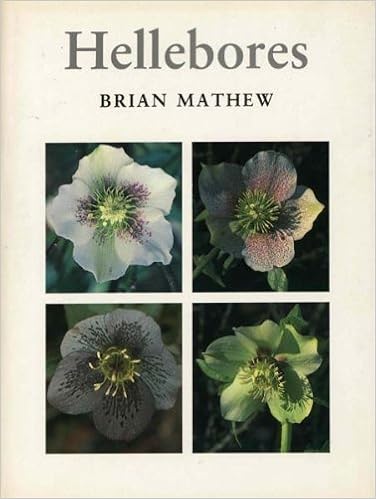
Mathew, Brian. Hellebores. Woking: Alpine Garden Society, 1989. Print.
The Gardener's Guide to Growing Hellebores
Rice, Graham, and Elizabeth Strangman. The Gardener's Guide to Growing Hellebores. Newton Abbot, Devon: David and  Charles, 2005. Print.
Rice, Graham: Helleborus, Octopus Publishing Group Limited, London, 2008


Anemone

__________________________________________________________________________
__________________________________________________________________________
GARDENING | PLANT ID

Wildflowers 

Windflowers, ANEMONE, or THIMBLEWEED

Anemone blanda
Grecian windflower,  (Anemone blanda)


Tenpetal Anemone, Tenpetal Thimbleweed, Windflower, Southern Anemone, Granny's Nightcap Anemone berlandieri Pritz. (Ranunculaceae)


Tenpetal Anemone, Tenpetal Thimbleweed, Windflower, Southern Anemone, Granny's Nightcap Anemone berlandieri Pritz. (Ranunculaceae )


 Anemone berlandieri Pritz. (Ranunculaceae )
Tenpetal Anemone, Tenpetal Thimbleweed, Windflower, Southern Anemone, Granny's Nightcap fruit


Anemone berlandieri Pritz. (Ranunculaceae ) Tenpetal Anemone, Tenpetal Thimbleweed, Windflower, Southern Anemone, Granny's Nightcap fruit
Anemone berlandieri Pritz. (Ranunculaceae )
Tenpetal Anemone, Tenpetal Thimbleweed, Windflower, Southern Anemone, Granny's Nightcap fruit


Anemone berlandieri Pritz. (Ranunculaceae ) Tenpetal Anemone, Tenpetal Thimbleweed, Windflower, Southern Anemone, Granny's Nightcap fruit
Anemone berlandieri Pritz. (Ranunculaceae )
Tenpetal Anemone, Tenpetal Thimbleweed, Windflower, Southern Anemone, Granny's Nightcap fruit
(Photographs, March, week 12, hardiness zone: 

Pasque flower, Anemone pulsatilla


Tall Thimbleweed  (Anemone virginiana)
The seed of thimbleweed is an achene

Prepare to be charmed by these pretty flowers. The Southern Living Garden Book describes as "a rich and varied group of plants ranging in size from alpine rock garden miniatures to tall 

Anemone Story and Origins

Anemone flowers are wildflowers that grow in many parts of Europe, North America and Japan. The name anemone is derived from Greek which means “windflower.” The name comes from the fact that the delicate flowers are blown open by the wind, which in turn blows away the dead petals as well.
According to Greek mythology, anemones sprang out of the tears of Aphrodite while she was mourning the death of her lover, Adonis. Adonis was killed by the gods due to their jealousy over his love affair with the beautiful goddess of love.
Anemone Symbolism and Colors
Anemone flowers are available in many colors with each symbolizing a different meaning.
  • White anemone flowers symbolize sincerity due to their delicate appearance.
  • Red and pink anemone flowers symbolize death or forsaken love.
  • Purple anemone flowers symbolize protection from evil.


 anemones grown in borders." They come in all shapes and sizes, making them a winning choice for . Read on for a few facts you may not have known about anemones, and consider planting a few to add interest to your backyard ly RanunculaceaeThey belong to the genus anemone, which is comprised of over 200 species. Anemones are also called "wind flowers." Anemones have this nickname because the word "anemone" derives from the Greek term anemos, meaning "winds." Anemos is related to the ragility and love. Bloom time extends from spring to fall. Depending on the species, anemones can bloom from the earliest days of spring into the fall months. Planting in October will ensure spring and summer blooms. Several anemone species spread more vigorously than others and are considered strongly invasive plants. Meadow anemone (Anemone canadensis), for example, spreads very quickly, making it an unsuitable planting for small gardens. Most anemones require partial shade and regular watering.  Anemones are relatively easy to care for once they're established in the garden. They like regular water in well-drained soil and a balance of sun and shade. A number of species will spread vigorously under the right conditions. Anemones come in all shapes and sizes. These flowers have a wonderful diversity of forms and colors. They come in single- and double-bloomed forms with five or six petals each. They offer up a rainbow of blossoms, including in hues of white, yellow, silver-pink, rose, blue, purple, scarlet, rust, copper, and coral. Anemones' association with fragility is outlined in the Victorian-era "language of flowers," in which blooms were paired with symbolic meanings for social purposes in order to share unspoken messages, even secrets. The flowers' connection to loyalty and love comes from Greek myth, when the goddess Aphrodite is said to have wept for the slain Adonis. Where her tears and his blood touched the earth, anemones grew. They can be grown in containers. If you want to plant these flowers in containers, look for tuberous anemones. They make good container plants and are relatively easy-care specimens planted alongside other garden growers. According to The Southern Living Garden Book, "Tuberous types are best treated as annuals in much of the South, since they tend to be short lived where summers are rainy or winters are warm." Getting anemones started in the garden takes some initial care and attention. According to The Southern Living Garden Book, gardeners should "plant tubers scarred side up (look for depressed scar left by base of linches deep and 812 inches apart in rich, light, well-drained loam. Or start in flats of damp sand; set out in garden when stems are a few inches tall. Keep soil moist during growth and bloom. Protect from birds until leaves toughen." They like slightly acidic soil Anemones are relatively hardy growers, and they're not known to be tantalizing to deer and other garden browsers. This makes them a good choice for backyard plantings and gardens in areas deer are known to frequent. Will you be planting anemones in your garden this year? Do you have a favorite species of anemone, and do you have any tricks and tips for caring for these flowers


Collectors of the UNC Herbari


 ____________________________________________________________________________________
 ____________________________________________________________________________________