Showing posts with label Pollinator Habitat. Show all posts

Friday, October 8, 2021

Pollinator Habitats | Hummingbirds

__________________________________________________


Shades of red dominate, flame acanthus, turks cap.....

Hummingbird Bush, Flame Acanthus
 (Anisacanthus quadrifidus var. wrightii)

Here are a few plant selections for hardiness zones 7 and 8.


Table 1:  Plants to attract Hummingbirds

It is difficult to find sunny locations in my backyard. Abundant native oaks and shade from the house and fence reduce the area I have to plant sun loving plants. On the west side of the house I have planted an area of red trumpets next to my herb garden.


Turk's cap (Malvaviscus drummondii)


Batface Cuphea


Cuphea Cigar Plant


Cypress Vine, Star Glory, Hummingbird Vine (Ipomoea quamoclit)

Habit: Annuals, Vine
Zones 5-11
Height: 15-20 ft. (4.7-6 m)
Spacing: 9-12 in. (22-30 cm)
Sun Exposure: Full Sun, Sun to Partial Shade
Bloom Color: Pink, Red, White/Near White
Bloom Time: warm season
Foliage: Lace-textured, Smooth-textured
Other details: May be a noxious weed or invasive
This plant is attractive to hummingbirds, bees, butterflies, and birds
Water Needs; Water regularly; do not overwater
Self-sows freely; deadhead if you do not want volunteer seedlings next season
Soil pH requirements:  6.6 to 7.5 (neutral)
Propagation Methods: From seed; direct sow after last frost
Seed Collecting: Allow seedheads to dry on plants; remove and collect seeds


Texas sage


Penta


2021 Hyden Photography 
for
Grassroots Horticulture
___________________________________________________
___________________________________________________

Tuesday, October 5, 2021

Lemon Beebalm | Monarda citriodora | Pollinator Habitat

_________________________________________________________________________
_________________________________________________________________________
Known by a number of common names, lemon beebalm is a 1-2 ft., aromatic annual with unusual, tuft-like, lavender to pink, whorled flower heads. Each whorl in the elongated spike is subtended by whitish or lavender, leaf-like bracts. Several stems grow from the base and are lined with pairs of lance-shaped leaves.


Bergamo Beebalm
Monarda Citriodora 'Bergamo'


Linnaeus named the genus Monarda in honor of a 16th century Spanish physician and botanist, Nicolas Bautista Monardes (1493-1588). Monardes studied medicinal plants brought back to Spain from the New World.


Horsemint has a distinctive citrus or lemony scent when the leaves are rubbed or crushed. It is very easy to grow and often forms large colonies. Bees and butterflies are attracted to this plant


Known by several names, Monarda citriodora, can be called lemon beebalm, purple horsemint, lemon mint, plains horsemint, lemon horsemint, horsemint, and purple lemon mint.


  • Landscaping with Native Plants of Texas and the Southwest (1991) Miller, G. O.
  • Native Texas Plants: Landscaping Region by Region (2002) Wasowski, S. and; A. Wasowski
  • Texas Wildflowers: A Field Guide (1984) Loughmiller, C. and; L. Loughmiller
  • Texas Wildscapes: Gardening for Wildlife (1999) Damude, N. and; K.C. Bender
  • Useful wild plants of Texas, the Southeastern and Southwestern United States, the Southern Plains, and Northern Mexico (Volume 1: Abronia-Arundo) (1995) S. Cheatham; M. C. Johnston; L. Marshall
  • Wildflowers of Texas (2003) Ajilvsgi, Geyata.
  • Wildflowers of the Texas Hill Country (1989) Enquist, M.
  • Spiders associated with lemon horsemint in east central Texas, Martin Nyffeler, et al.
  • Evaluation of the Antifungal Activity of the Essential Oils of Monarda citriodora, Bishop.
©  Grassroots Horticulture
2000-2019
______________________________________________________
______________________________________________________

Friday, August 13, 2021

Pollinator Habitat | Planning a Butterfly Garden

___________________________________________________

There is nothing more delightful than watching a butterfly skip along a flower bed on a warm summer day. I have a carpet of perennials that bloom from March through Winter. The first blush is a mix of Louisiana Phlox and purple Iris. After these fade the Purple Coneflower comes on full strength and tolerates that early summer heat and then the blue mistflower covers as the coneflower fades. All of these flowers have colors that produce that Ah feeling of relaxation as you passively enjoy your butterflies after a long day at work. 

Nectar Plants

These are the plants that the adult butterflies feed on. These flowers contain nectar which is basically sugar water. The nectar is vital to the survival of the butterfly.


AbeliaAbelia shrubs have an arching form. It is hard to adapt the abelia to a formal garden. The abelia has a weeping form. My observation is the swallowtails seek out the less ubiquitous flower. The scent is a light sweet perfume, not as significant as the earlier blooming jasmines, but softly striking. The light pink flowers are small but abundant. The shrub is semi-deciduous, tolerates drought, and grows well under my many native oak trees.

Anise Hyssop. Anise hyssop is a forb or herb in the mint family. It tolerates drought. I have it planted with lavender due to their similar water needs but the purple flowers on both  plants are shaded quite differently. The Anise hyssop has a showy lavender magenta flower born on a spiky stem. The spikes tend to take on the Albert Einstein hair style, also, but deadheading keeps it tidy. Several small species of butterfly flutter around this and the nearby blackfoot daisy. I have not noticed a scent.


Bee Balm. Bee Balm or monarda is a tall and very showy plant. The Peter's Purple variety does well along the outer edge of the butterfly garden. It is a great perennial, flowering in the early spring (April). It does seem to attract more bees than butterflies but butterflies are attracted to masses of color and this is an entire cheer leading squad of purple pom poms. 

Four O'clockEasy to start from seed is the characteristic that jumps first to mind when considering this perennial. Four O'clock plants are a tall forb with a surprising feature, the flower color can be yellow, white, red or magenta or a combination of these colors. Mirabilis jalapa, Mirabilis means wonderful. Native of Peru 


Flame Acanthus. Hummingbird bush has a red tubular flower. The shrub is deciduous. Since hummingbirds tend to be territorial the feeding function of this flower is generally reserved for the hummingbird from my observations. 


Joe-Pye Weed. A tall forb, joe-pye weed is located in a back corner of my yard. 

Lantana. Several lantanta in gold and red form a mass of color to attract butterflies in a full sun setting


Passion Flower. This vine hosts the larvae of Gulf Fritillaryor Passion Butterfly (Agraulis vanillae)


Purple ConeflowerGrown enmass, for May nectar. Easy to start from seed and tolerates many soil types and water restrictions.

Echinacea (ek-i-nay-she-ah). A genus or native perennials of the Asteraceae (Aster Family)  Attracts butterflies all summer long - A favorite flower of the Monarch butterfly. - Easy sowing, germinating and growing - Heat tolerant.


Tiger Swallowtail 

Tiger Swallowtail (Pterourus glaucus) - female


Black Swallowtail 

Black Swallowtail-female (Papilio polyxenes)

Host Plants for Black Swallowtail and most swallowtail caterpillars: Parsley, Dill, Rue Leaves of plants in the parsley family (Apiaceae) including Queen Anne's Lace, carrot, celery and dill. 
Nectar Plants:  Nectar from flowers including red clover, milkweed, and thistles.


Common Buckeye

Host Plants (for larvae) Common Buckeye Caterpillar: Plants from the snapdragon family including snapdragon (Antirrhinum) and toadflax (Linaria); the plantain family including plantains (Plantago); and the acanthus family including ruellia (Ruellia nodiflora). 
Texas Native: Ruellia drummondiana is a larval host and nectar source.
Nectar Plants: Favorite nectar sources are composites including aster, chickory, gumweed, knapweed, and tickseed sunflower. Dogbane, peppermint, and other flowers are also visited.

Host Plants (for larvae): Passion Flower Vine
Various species of passion-vine including maypops (Passiflora incarnata) and running pop (Passiflora foetida).


Painted Lady
Host Plants (for larvae): Caterpillar Hosts: More than 100 host plants have been noted; favorites include thistles (Asteraceae), hollyhock and mallow (Malvaceae), and various legumes.
Adult Food: The Painted Lady prefers nectar from composites 3-6 feet high, especially thistles; also aster, cosmos, blazing star, ironweed, and joe-pye weed. Flowers from other families that are visited include red clover, buttonbush, privet, and milkweeds.


Monarch and Queen

Host Plants (for larvae): Mexican milkweed 
Adult Food: Nectar from all milkweeds. Early in the season before milkweeds bloom, Monarchs visit a variety of flowers including dogbane, lilac, red clover, lantana, and thistles. In the fall adults visit composites including goldenrods, blazing stars, ironweed, and tickseed sunflower.


Pearl Crecent


Orange Sulfurs

Host Plants (for larvae): Plants in the pea family (Fabaceae) including alfalfa (Medicago sativa), white clover (Trifolium repens), and white sweet clover (Melilotus alba).
Adult Food: Nectar from many kinds of flowers including dandelion, milkweeds, goldenrods, and asters. 

Texan Crescent

Host Plant for larvae:  Various plants of the acanthus family including Ruellia, Jacobina, Beloperone, and Siphonoglossa.
Texas Natives:
Anisacanthus quadrifidus var. wrightii is a larval host nectar source. 
Branched foldwing (Dicliptera brachiata) is a larval host and nectar source. 


© 2021 Hyden Photography
for
 Grassroots Horticulture
__________________________________________________
__________________________________________________

Wednesday, April 28, 2021

Summer Prairie | A Bird's Eyeview

__________________________________________________________________________

A UTILITY EASEMENT, TRAIL, AND WILDLIFE HABITAT


Silver-leaved nightshade, white horsenettle, Solanum eleagnaefolium


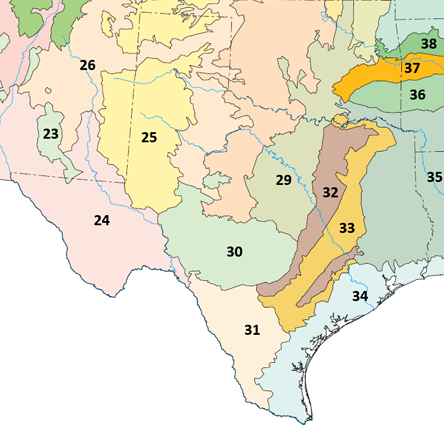
While walking along our local trail, I photographed several endemic natives and a few non-native plants that make-up a restored blackland prairie ecosystem. You can observe birds fly into grassy areas and insects pollinating flowers. The etymology of the word "prairie," is French from Latin and the English equivalent is meadow. A meadow or prairie is populated with grasses and shrubby plants.The Texas Blackland Prairies are named after the dark, rich soil.This grassland ecoregion is found running about 300 miles from the Red River in North Texas south to San Antonio.


Texas ecoregions.png
Texas blackland prairies (area 32 on the map)


Grasses and Forbs Growing in the Texas Blackland  Prairie

The horse nettles are members of the nightshade family.  A distinguishing characteristic of all horse nettles are prominent, bright yellow stamens. Confused with horse nettle sometimes, are purple ground-cherry (Quincula lobata). It is a purple flowered Nightshade member and very similar in appearance.


Silver-leaved nightshade, white horsenettle, Solanum eleagnaefolium


Silver-leaved nightshade, white horsenettle, (Solanum eleagnaefolium) fruit


A member of the Gentian family,  I believe this is Lady Bird's Centaury, Centaurium texense 


Purple Prairie Verbena


Rudbeckia


Indian Blanket (Gaillardia pulchella)


Sneezeweed


Plantain plantago sp.


Monarda

Pincushion Flower

Similar flower in appearance, native Dalea feayi
Feay's prairie clover, Globe-headed Prairie Clover


Sneezeweed,  a skipper on cudweed

plantain plantago sp.
Plantain plantago sp.


Curly dock


Texas frogfruit


Indian Paintbrush

Bluebonnet


Prairies throughout Texas
Preserved Prairie Locations by County in Texas


Bowie County Mary Talbot Prairie
Collin County Peters Prairie
Falls County Drews Prairie
Falls County Lehmann Prairie
Falls County Mezynski Prairie
Falls County Nelson L. Wieting Prairie
Falls County Riesel Prairie
Franklin County Daphne Prairie
Harris County Deer Park Prairie
Hunt County Clymer Meadows
Lee County Tanglewood Prairie
McLennan County Simpson Prairie
Mitchell County Maddin Prairie Preserve
San Jacinto County Russell Grasslands and Forest Preserves
Wood County Edmoore Creek
Little bluestem grass (Schizachyrium scoparium)

Prairies evolve over time with pioneer species and later successional species, like little blue stem grass, coming in as the soils mature. That’s why prairie restorations have to occur over time.


  • Two of my "go to" books for Texas native plants


                                                                               http://sutton.agrilife.org/files/2011/08/rangecontestmasterplantlist.pdf                                          
Grassroots Horticulture
2018__________________________________________________________________________
__________________________________________________________________________