Showing posts with label hibiscus. Show all posts

Thursday, September 9, 2021

Family | Malvaceae


__________________________________________________________________________
__________________________________________________________________________ 


Garden with a Purpose | Plant ID


The mallow family (Malvaceae) has many striking plants including hibiscus and Althea. Althea officinalis is known by the common name marsh mallow and the derivation for the name given to the confectionery treat, marshmallows. 

hibiscus


Japanese lantern  (Hibiscus schizopetalus) 

MBG


Texas Star Hibiscus, Hibiscus coccineus

The leaves of Texas Star Hibiscus are digitate and resemble cannabis leaves.


Scarlet rose mallow, Hibiscus coccineus


Pink Hibiscus (Hibiscus)
A little or a lot - Georgia O'Keefe

Hibiscus syriacus | Rose of Sharon, Althea


_________________________________________________________________________________


sphaeralcea | GLOBE-MALLOW 

Etymology
The name of the genus is derived from the Greek words σφαῖρα (sphaira), meaning "sphere," and αλκεα (alkea), meaning "mallow."


Globe Mallow  (Sphaeralcea)


________________________________________________________________________________


Abelmoschus | okra


Mallows

___________________________________________________
___________________________________________________

Gardening for Wildlife and Color

CREATING impact


The mallow family (Malvaceae) has many striking plants including hibiscus and Althea. 
Althea officinalis is known by the common name marsh mallow and the derivation for the name given to the confectionery treat, marshmallows. 

Hibiscus

Texas Star Hibiscus

The leaves of Texas Star Hibiscus are digitate and resemble cannabis leaves.
Japanese lantern  (Hibiscus schizopetalus)


Althea


Globe-Mallow


Globe Mallow  (Spaeralcea)


okra

 Okra  (Abelmoschus esculentus)

This year our okra has had a slow start but this heat and humidity loving plant should start taking off with temperatures in the nineties.

__________________________________________________________________________ 

Malvaviscus

Texas Mallow, Mexican Apple, Sleeping Hibiscus, Bleeding Hearts, Manzanita (Malvaviscus arboreus var. drummondii)

This spreading perennial or shrub grows to a height of 2-3 ft. It has bright-red (sometimes pink or white), pendant, hibiscus-like flowers. Their petals overlap to form a loose tube with the staminal column protruding and is said to resemble a Turkish turban, hence its most common name, Turk's Cap. 


Turk's cap (Malvaviscus drummondii)

Drought tolerant. Prefers partially shady sites. Under cultivation, Turk’s Cap will adapt to and thrive in many different sites, including full sun and heavy soil, though unremitting sun will cause its leaves to become smaller and somewhat distorted.


Turk's cap (Malvaviscus drummondii)


Turk's cap (Malvaviscus drummondii), pink


Turk's cap, seed pod
edible


Callirhoe

Winecup
Winecup, also known as poppy mallow (Callirhoe), is a beautiful silky wildflower 
blooming during the middle of the spring season in our 7b hardiness zone. 
The sun was very bright when I took these photographs. 

____________________________________________________________________________________
 ____________________________________________________________________________________

Friday, May 10, 2019

Japanese Lantern Hibiscus

_________________________________________________________________________
_________________________________________________________________________

outstanding flora

Hibiscus ‘Japanese Lantern’ (Hibiscus schizopetalus)
This African hibiscus has an upright and spreading form which highlights the deeply curved petals and dangling stamens. Grow in rich, well-drained soil and provide plenty of water and fertilizer. Flowers form on new wood, 

so, prune regularly to maintain a nice shape and stimulate more blooms.

Tropical hibiscus can add a colorful splash to container plantings or as indoor flowering plants. Hibiscus schizopetalus
, with various common names including fringed hibiscus, skeleton hibiscus,  Japanese lantern, and pagoda flower, is a native of tropical East Africa, including the countries of Kenya, Tanzania, and Mozambique. 
The distinctive flowers with their frilly petals and long slender column are described as looking like an Asian lantern, a chandelier or a parachute.

The hibiscus gets it's name from Japanese lanterns like those seen below.


Japanese Lanterns
Urabon, known as, "Feast of Lanterns," is an annual summer event in which the Japanese honor deceased ancestors. Paper lanterns are intended to guide the spirits of ancestors home.


Paper lantern is crafted from tough pressed pulp reinforced rice paper.


Since, Japanese lantern hibiscus is a tropical hibiscus it is best grown in containers or hanging baskets in hardiness zones 5-8. It needs an abundance of sun, water and rich soil.


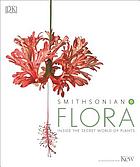
Smithsonian Flora : inside the secret world of plants.

Smithsonian Flora : inside the secret world of plants.