Showing posts with label Ginger. Show all posts

Friday, December 3, 2021

Family | Zingiberaceae

_________________________________________________________
__________________________________________________________

Gardening | Plant ID

The Ginger family


I have been experimenting with root plants. Gingers and turmeric are exotic. The foliage dies back but returns in the spring. Variegated ornamental ginger is a favorite so I have added this to the culinary ginger and turmeric. Variegated varieties abound in my garden basically drawn to add interest in a “dark” shady garden of native oak trees.
Turmeric (Curcuma longa)


Zingiberaceaethe ginger family is a family of flowering plants made up of about 50 genera with a total of about 1600 known species of aromatic perennial herbs with creeping horizontal or tuberous rhizomes distributed throughout tropical Africa, Asia, and the Americas. Many of the family's species are important ornamentalspice, or medicinal plants. Ornamental genera include the shell gingers (Alpinia), Siam or summer tulip (Curcuma alismatifolia), Globba, ginger lily (Hedychium), Kaempferia, torch-ginger Etlingera elatiorRenealmia, and ginger (Zingiber). Spices include ginger (Zingiber), galangal or Thai ginger (Alpinia galanga and others), melegueta pepper (Aframomum melegueta), myoga (Zingiber mioga), korarima (Aframomum corrorima), turmeric (Curcuma), and cardamom (AmomumElettaria).

ZINIBER                                         

Ginger (Zingiber officinale) is a flowering plant whose rhizome, ginger root or ginger, is widely used as a spice and a folk medicine.
Ginger
1896 color plate from
                          Köhler's Medicinal Curcuma              


Curcuma                                            

Turmeric (Curcuma longa)


Turmeric (Curcuma longa)

Curcuma longa, Turmeric is a flowering plant in the ginger family Zingiberaceae. It is a perennial, rhizomatous, herbaceous plant native to the Indian subcontinent and Southeast Asia that requires temperatures between 20 and 30 °C (68 and 86 °F) and high annual rainfall to thrive. Plants are gathered each year for their rhizomes, some for propagation in the following season and some for consumption.


Curcuma alismatifolia, Siam tulip, is not related to tulips (tulipa). It grows well in climates with hot, high-humidity summers. The plant prefers sun to part shade and mildly acidic to neutral, moist, well-drained soil. Although this variety is more drought tolerant than most, especially in partial shade, Curcuma needs consistent moisture throughout the growing season in full sun and should never be allowed to dry out.
Curcuma alismatifolia
Holland Bulb company


Alpinia

Variegated shell Ginger (Alpinia zerumbet)


Alpinia zerumbet, commonly known as shell ginger among other names, is a perennial species of ginger native to East Asia. 


Ornamental shell ginger, Alpinia zerumbet 'Variegata'

I grow this successfully in my woodland garden (zone 7b)


Hedychium                                                     

White Ginger Lily  (Hedychium coronarium)


The White ginger plant can reach five feet tall and in late July and through August produces a very fragrant white flower.  The scent is as lovely as the flower. 


All material © 2024 by Hyden Photography
for 
Grassroots Horticulture
________________________________________

Ginger

___________________________________________________

Gardening 

CREATING fragrance in your woodland garden 

Ginger flower


Image result for ginger root plant
African ginger
Jamaican ginger
Japanese or Korean ginger (Zingiber mioga), use in a woodland garden


White Ginger Lily  (Hedychium coronarium)


White Ginger Lily  (Hedychium coronarium)


References:

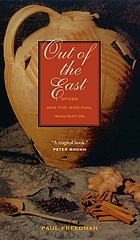
Out of the East : spices and the medieval imagination
Freedman, Paul. Out of the East: Spices and the Medieval Imagination. New Haven: Yale University Press, 2008. Print.

The spice route : a history
Keay, John. The Spice Route: A History. Berkeley: University of California Press, 2006. Print.

The taste of conquest : the rise and fall of the three great cities of spice
Krondl, Michael. The Taste of Conquest: The Rise and Fall of the Three Great Cities of Spice. New York: Ballantine Books, 2007. Print.

The agronomy and economy of turmeric and ginger : the invaluable medicinal spice crops.
Nair, K P. P. The Agronomy and Economy of Turmeric and Ginger: The Invaluable Medicinal Spice Crops. Burlington: Elsevier Science, 2013. Internet resource.


Rosengarten, Frederic. The Book of Spices: [the Colorful and Fascinating History of Spices and Their Place in the World Today]. New York: Pyramid Books, 1973. Print.

Image result for Swahn, Jan-Öjvind. The Lore of Spices: Their History, Nature and Use
Swahn, Jan-Öjvind. The Lore of Spices: Their History, Nature and Uses Around the World. Accokeek, MD: Stoeger Pub, 2001. Print.


All material © 2021 by Jeanette Hyden for Grassroots Horticulture
___________________________________________________________________________________
___________________________________________________________________________________
Tuesday, January 11, 2011

Shell Ginger | Alpinia zerumbet 'Variegata'


A very striking ginger that is probably over planted. Will not flower following winter kill of the foliage to the ground. Makes an excellent foliage for floral arrangements. Plants cannot tolerate hard freezes. Is a high contrast specimen in nearly any planting combination because of the bright yellow color in the variegated foliage.


Alpinia zerumbet 'Variegata'

Common Name:Variegated Shell Ginger
Plant Type:Evergreen
Leaf Type:Broadleaf
Hardiness Zone:8, 9, 10, 11
Height:2- 5 feet 
Spread:5 - 10 feet 
Bloom time:Spring, Summer
Flower color:White, Multicolored
Fruit present:Summer, Fall
Fruit color:Yellow
Light Exposure:Sun, Part Sun
Drainage:Well drained, Moist
Rate of Growth:Fast
Water Requirement:Medium
Maintenance Level:Low
Susceptible to insects
and diseases:No
Landscape Categories:Plants with Fragrance
Tropical, Exotic, and Indoor Plants
Variegated Plants